Showing posts with label poet (live). Show all posts

25 November 2012

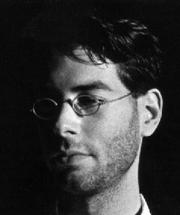
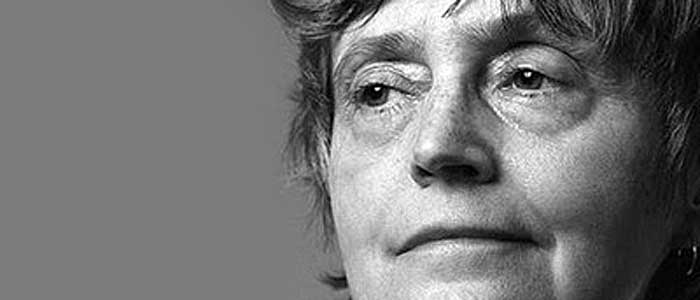
Diane Wakoski

[from Diane Wakoski's Toward a New Poetry, Michigan, 1980]

what I would like to do is be as real in my writing as I am in life, and I’m a fairly real character in life. I would like to come off the page, and be alive and singing and telling the truth, and telling the history, and at the same time making poetry out of it. I think of that as being what twentieth-century free verse is all about. . . .

I think that poetry is an act of problem solving, which means that if there are no problems solved there is no poetry to be written. . . .

The purpose of the poem is to complete an act that can’t be completed in real life. . . .

what real poetry was all about was creating a personal mythology rather than simply participating in the mythology of your culture. . . .

that’s of course our great quest: how to maintain the passion in its purest and its most violent — and I think I use that word advisedly — violent form. But have it in fact contained as an artifice. I don’t want the snakes in my head to turn you to stone. I do not want the heat of my anger to melt you into a puddle [laughter]. And yet I don’t think that art can exist unless there is that power to turn you to stone or to melt you to your gaseous elements. . . .

here’s a little discrepancy in my work because male and female sexuality are terribly important to me. If you’re going to ask me questions of how do I resolve them, maybe that is the problem solving that I am involved with because in some way I’ve always felt that it’s my destiny to be the spirit. And yet what I chafe about most in life is being treated as a spiritual person rather than a sex object [laughter] and woman by the man that I love. But, and maybe that’s what my poetry is really about, is, is, is this life journey between the body and the spirit. There’s no easy answer to it. I don’t think you become spirit by denying the flesh, and living in hair shirts. And yet in some way you do become spirit by simply not acknowledging the flesh. But again because we are body, that sounds like denial. I don’t think denial is the answer. Because what denial becomes in the physical son cutting off the head of the father, or whatever physical act that happens. So, so . . . these are problems that fascinate me, and perhaps what a lot of my poems are about. How do you solve these problems? . . .

“Vision” is what is most private, intimate, eccentric, unusual, unique, visionary about the person. By definition it would have to be that part of you which is somewhat repressed or put down because it doesn’t fit in with the forms. But it may be not be forbidden . . . it may not just be repressed or put down because of convention. It may be in fact the part of you that you have to create that is completely unique. In other words, the ability to create something unique about yourself. And you can still be quite an acceptable human being and a good member of society and a nice friend and a good lover and any number of other things. But you probably can’t be a poet if you can’t create yourself as unique in some way.


05 October 2012

Aracelis Girmay

[from Aracelis Girmay's Kingdom Animalia, BOA, 2011]

& When We Woke

It rained all night. It did not rain.
I strapped my life to a buoy — & sent it out.
& was hoping for a city whose citizens sing
from their windows or rooftops,
about the beauty of their children
& their children’s eyes, & the color of the fields
when it is dusk. & was hoping for a city
as free as the rain, whose people roam
wherever they want, free as any real, free thing is free.
Joyful. Green. & was hoping
for a city of 100 old women whose bones
are thick & big in their worker hands
beautiful as old doors. & when we woke,
dear reader, we’d landed in a city of 100 old women
telling their daughters things. & when we turned
to walk away, because we did not think we were citizens
of this strange & holy place, you & I, the hundred old
women said, No, No! You are one of us! We are your
mothers! You! You! Too! Come & listen to our secrets.
We are telling every person with a face!
& they stood us in a line facing the sea,
(because that is the direction we came from)
& behind us there was another line of women
& another, & we sang songs. & we filled the songs
with our mothers’ names. & we filled the songs
with trees for our mothers to stand under,
& good water for our mothers to drink. & we filled
the songs with beds for our mothers to lay down in
& rest. We filled the songs with rest. & good food
for our mothers to eat. We made them a place
in our singing, & we faced the sea.
We are still making them a place
in our singing. Do you understand?
We make them a place where they can walk freely,
untouched by knives or the police who patrol
the borders of countries like little & fake hatred-gods
who patrol the land though the land says, I go on
& on, so far, you lose your eye on me.
We make our mothers a place in our singing & our place
does not have a flag or, even, one language.
Do you understand? We sing like this for days
until our throats are torn with singing. Do you understand?
We must build houses for our mothers in our poems. I am not sure,
but think. This is my wisest song.

Aracelis Girmay

11 September 2012

Cate Marvin

[from Cate Marvin's Fragment of the Head of a Queen, Sarabande, 2007]

Landscape with Hungry Girls

There’s blood here. The skyline teethes the clouds
raw and rain’s course streams a million umbilical
cords down windows and walls. Everything gnaws,
and the pink polish on their girl-nails chips, flakes
off as they continue to dig through towering heaps
of refuse. It’s a story, as usual. As usual, a phone
and dead silence. Or the phone: a lobster to the ear.
Girls resigned to being girls. The softer faces they
find in the mirrors. The limp shake, a hand placed,
a flower wilting moist on the man’s palm. Or hard
handshakes deemed “aggressive”: snakes. O, girls.
All of them carefully watching carefully the faces
of their sleeping men, even when their own faces
are more beautiful in their watching, and if only they’d
watch their own faces beneath the revolving lights
sliding between the blinds: they are blinded from
watching their men sleep so dumbly. The headaches,
the insistent grip of a gnawing stomach, eating itself.
Thinking hunger is strength, how hurt they are, girls
picking at food on their plates. I like a girl who eats.
Careful, what you say you want. The moon is distant,
yet cousin to her face: our genders worse than alien.
Bleeding is something everyone does. You don’t call.
Girls snack on skyscrapers, girls gut their teddy bears,
and girls saw their own faces off. What is it to lack
compassion? When you walk through a zoo, do you
not think the animals it houses could have been you?
Who would you be, how hungry, if you were a girl
feeding only on the meek sleep of male countenance?
Would you stand vigil, would you starve as they do?

Cate Marvin

27 August 2012

Ann Townsend


Trimmings

Restless, pulled outside by fog
and fitful rain, she carries scissors
and basket to trim the last wild things.

She crouches, wind-shaded,
before parsley, tarragon, thyme:
herbs weep into her hands,

spiders scatter across pine needles.
Half-dark, wholly cold,
the evening of first frost

falls down as rain, cool mouth
against her unprotected neck.
Across the lake her lover waits

in a room warm with smoke,
jukebox's muted melody,
deep brown bottles ranged

across the bar. Once she leaned
into his mouth, whiskey sweet
between them. The tiny napkins

beneath their drinks grew wet
with condensation. Then
their fingers touched,

an accidental convergence of the stars.
She shakes loose a bunch of sage.
It swings like a heavy skirt

in her hands, one caterpillar
dropping free. In the sky
the constellations fuzz and fade.


After the End

Because I left him there so you could see
        his body, broken by the fall, the hawk's

small relatives hopped from higher branches
        and called a kind of glee that he was dead.
               By afternoon, the ground around him dusted

with feathers and gravel kicked up, he looked
        like a bundle of rags tossed

from a car and tumbled there, but still
        graceful, neck flung back in the moss and dirt,
               and the yellow claws curled to question marks.

Then the trees were quiet, the other voices
        gone. When a car turned into the driveway,

I knew it wasn't you. They sat a while,
        four men, the same dark suits, carefully
               tended hair. Missionaries: I could tell

from the window where I stood beyond
        their line of sight. All their doors opened

as if by a common feeling, something
        unseen and insistent in the air.
               They did not see the hawk lying there, dead

from its long fall, or age, or driven down
        by the crows that nest in the pines above.

They did not see me. I stepped back, behind
        the curtain, and wished you home, who could see
               these things and know what is beloved, what is dead.


Mid-February, White Light

Country music and a black dog barking
on a chain, and the voices of grown children
complaining — Dad, when are we going to burn
this pile? — cast over from next door

on the first nearly warm afternoon.
Everyone has come out to see the sun.
Slow bees cluster at the porch step
and the cat has wakened in a pool of light.

So when the chainsaw coughs into gear,
to clear dead wood away from the gas line,
it's like some strange natural description —
the ground frozen in its dream of January

creaking beneath our feet,
the impetus of metal cutting into wood,
the urge to flight when the bee
hazards its way, wind-driven or scent-impelled,

into my hair — to touch, to continue.
Even our unmade bed, framed by the peeling
slats of the bedroom window,
looks not like a tranquil reminder

but disturbed, shaken from a measured stillness
of white sheets, pillows, red quilt
cast on the floor, a reduction from action to disorder.
Or the gift of a warm wind that feels wet.

11 August 2012

Noelle Kocot

[from Noelle Kocot's Sunny Wednesday, Wave, 2009] The Poem of Force after Simone Weil's Essay on The Iliad

How often have I lain beneath a roof of trees and sestinas,
Sestinas and trees, the chasmus of my timid hopes decked
Out in the styles of the day,
Losing myself in novels of corporeal sunshine and a home
Where a samovar is always gurgling on the stove, and men of frivolous
      or serious wives
Tie self-strung misery around their necks. And knowledge

Is a shining lamp that lights the hieroglyphs of love and suffering, and
      no knowledge
Is enough to put it out. I used to dream of a sestina
Whose very presence would ignite the longing of an ancient wife
Who'd swim the matrices of grace into the waves that swept the deck
Of a ship leaving its home
Of drowsy cows and frogs waiting by the river as the day

Blinked over never-ending fields. But today
I feel in almost perfect balance with the world, and any knowledge
That I had or have is but a lying down in the glass casket of my
      thoughts, the long small home
I can barely even find were it not for this sestina
Crashing like painted rain against my eyes decked
With brazen orchid light. And were I not a wife

 And mother to these thoughts, I'd take my wifely
Ringless hand and draw the curtains on the days
Of an atavistic reaching out and clear the deck
For something more untoward than the acknowledgment
That we are riveted between laughter and the abyss, like characters
      in a sestina
With all the lines crossed out. I find my home

When I travel the near and distant byways, I find my home
With the wives
Of absent heroes put to sleep in the sleep of bronze, and in sestinas
That haven't borne witness to a single day
Of war, arrows flying on both sides but none to pierce the knowledge
That we ourselves are a deck

 Of marked cards that decorate
The history of our homeless
Tribe. To know
This is to understand Hector's grief for the long-robed wives
As he stood outside Troy's walls in the rising of the day
Waiting for his death, and trembling, his soul mourning its fate of
      being trapped inside a thing — to understand this is to return to an
      age of epics, not sestinas.

For now I have only the bare knowledge of all wives
Who've ever decked their homes
With the talismans of the day, and my talismans are sestinas.

Noelle Kocot

13 July 2012

Steve Shavel

[from Steve Shavel's How Small Brides Survive in Extreme Cold, Verse Press, 2003]

How Small Brides Survive in Extreme Cold [excerpt]

2

Every word occludes another, just as
every perspective cuts across some larger circuitry — logjams
of purposiveness, the whole farrago
of incidence, everything a something
taken out of context, the stunned minnow
in the heron's crop
mouthing the vowels of horror, or the way
you wake up sometimes with a
loded word on the tongue
the odd fragment
of dream cipher (today no
kidding it was tatterdemalion).

But of the mechanism, spring-
wound, that drives these recirculating
waters, disgorged on the hill towns in
last night's storm or unlocked
from the rockface its last
blue icicle integument, trundling
past stubborn milltowns and
former milltowns, their trestles
cantilevers and
crumbling abutments,
their sullen smokestacks,
rosettes of identical split-
level around the cul-de-sac,

sluiced through the archaic reactor
whose lab-coated acolytes
scrutinize the apparatus, tending
the device
its dread core their queen
hived and bloated with light,

turning bend after bend
of perturbation to get here
where the currents slow to spread their snares
and drop their sediment —
we are all of us oblivious,
taken in entirely by the parade
of forms, the events and detritus
that drift across the meniscus of consciousness.
Only the sandpiper it seems
sees past its own reflection —
and the kingfisher, who lunges now
through the shattered pane
to that low strange corridor
its glimpse of minnow where
last year's leaves in a
spectral cortege, lit
with the amber half-light
of the after-life
leach their tannins or settle
little by little a skeletal tracery
into the bottom silt,
thick as the dust of an undisturbed
necropolis.

While above an unseen hand works feverishly
to smooth the sheet of other-being
over the ever-unmade bed of the river.
And while I'm going on like this
a something noses closer through the shallows,
something I didn't notice, nor
he me til
thwack
and recoil
the beaver startled startles back
his blackjack tail on the water's pate
then
thwack again
               KERTHUNK
in spreading rose-windows
of concussion. The Willow-Manitou
looks on and marvels.
An after-sprite of droplets shivers down.

Several weeks now he's been at it
this waterlogged carpetbagger
interloping both the banks up and down.
Daylong the air endures the rasp
and crepitation of his handiwork, a
jigsaw of precision, each chiselled branch
a deftly-placed sprag in the works.

For these two are pitted
here and everywhere
one against the other:
the curving intelligence of river,
the Cartesian architectonic
of the beaver, part iconoclast
breaking the symmetries,
troubling the face of the waters, part
masonic artificer, geometrician,
master anaesthetician, plotting and fretting
to put the river under and
three or four in confederacy
equal to an entire
army corps of engineers.

But for now the river doesn't give a damn.
Rather it is the dam that gives.
And so on and so forth through the spate of May . . .

Steve Shavel
[photo by Jenna Sunshine]

02 July 2012

Daniel Nathan Terry

[from Daniel Nathan Terry's Waxwings, Lethe, 2012]

Photograph, 1984

Swallow this
house — bedroom window paned
like a roadside cross
erected for a reckless boy, wreath
of camera-flare, paper flower of real grief
with too bright a center, edges finally fading
in shoebox weather.
                               You know
what happened there.
                                  You know
this is more than a snap-
shot. Flat as it seems, it will swell
on your red tongue and will become
those rooms — that room with its pale boy
sinking to his knees, again, sinking
into shadowed corners.
                                     Come,
fold into black origami.
                                     Come, unhinge
your jaw like the copperhead you saw
becoming a blackbird in the woods — mouth-first,
then your throat, your white ribs and pink gut.
All that's left of you
                               must muscle through
the flapping wing, thin legs trembling,
one skeletal foot curling inward.
                                                   It's in you now —
the song, the sin, the bones, the room, him
telling you it's alright, and every man does it
when a girl leaves him empty-
handed.
             Swallow this
house, blackbird-who-became a snake. Swallow
this house and keep yourself
                                             from remembering
how to sing.


31 May 2012

Evie Shockley

[from Evie Shockley's The New Black, Wesleyan, 2011]

dear ace bandage,

       the wound is hard to place.
the wound is not your job.
       i thought i needed you, but
things are already tight. you
       are like putty in my hands,
or is my thinking colored?
       flesh tone or dial tone? who
you gonna call? your pretty
       silver broach sets in, holds
you at a tension. could it
       clasp the skin together long
enough for two flaps to re-
       attach? miss match. rematch.
love. ace. deuce. game. open.

dear cuddly dharma,

       you make it easy to say no,
just. i turn a blind eye to
       temptation after staring hard
into your hydrogen smile. we
       spoon, and i hate to stir, but
fetish is always in the mix.
       even fate looks glamorous
by lamplight. spotlight. hot.
       wound or would? would or
wooden? batter batter batter!
       you have a dream of night-
marish proportions. where
       there's a will, there's aweigh.
unanchored. unmoored. off.

dear existential fallacy,

       i need you to be concrete.
you need me to liquidate
       my account. pour, pour me,
with my fluid tale. tail, to
       hear you tell it. fluent in six
currencies. dirty lucre. you
       tracking bills counterfeited
by the page. lyre, lyre, pants
       the town crier. griot. seer.
sikh. psyche. that, baby, went
       out with the dirty dishwasher.
cross my palm with olives:
       i will tell you your pastime.
your passive voice is dated.

dear gift horse,

       open wide. now bite down.
that incident was not an
       accident. don't. act like i'm
stupid. do you come with
       a saddle? which way to
the sunset? that's the thing
       about possibility: it's dark
in there. you can't judge
       an r&b song by its covers.
colors. dolores is blue: why
       must she give up her security
blanket? she's had it since
       she was born. my, what sharp
teeth you have! all the better.

dear ink jet,

       black fast. greasy lightning.
won't smear. won't rub off.
       defense: a visual screen: ask
an octopus (bioaquadooloop).
       footprints faster than a speed-
ing bully, tracking dirt all
       over the page. make every
word count. one. two. iamb.
       octoroon. half-breed. mutt.
mulatto. why are there so few
       hybrids on the road? because
they can't reproduce. trochee
       choking okay mocha. ebony,
by contrast, says so much.

Evie Shockley

10 May 2012

Julie Carr

Julie Carr’s Sarah — of Fragments and Lines, Coffee House, 2012]

Conception Abstracts

                            Heat teems from the meat of the form

      Tame heat if tame form, if maimed form then fierce.
                       Seems eaten, this mate, this timed tenant.


Tenured member of my own passive nature, I tested the
tine of the task. Desperate for some apt rapture, tapped
the lap of the master. Faster. Water and laughter, the
last splatter of summer, later, the hot slap of not
sleeping. Walled by fault, the taut self slipped. And to
what heights after?


[untitled]

In the second week of solid rain, Sarah. You woke at dawn with 
a head of dream. Clover’s fell enthusiasm expands in the 
perpetual bath. Sarah. The lamp suspended in the garden, 
Sarah: Cheshire-like and falsely dear. We make boats of juice 
bottles, houses of cereal boxes, cats of toilet paper, eggs of 
lavender and stone. Sarah. At the festival of water we watch an 
orchestra of children sway to the music of their strings. And in 
your room you succumb. Learn as you are dying how to 
behave like one near dead. As magpie, you are eave-bound, 
acquisitive, indiscriminate. Beak clipping the scraps of your old 
existence, the strings of your future weave, Sarah. As duck you 
are industrious, with a reed in your possession, across pond 
you slide. But here, tatter-head, you are forced into days, 
broken into hours, and those hours mercilessly sliced.

Julie Carr

08 May 2012

Arecelis Girmay

[from Arecelis Girmay's Kingdom Animalia, BOA, 2011]

Small Letter

do not go, this day, the red
of bridges, my little, stay

beside me over
the ruins of san francisco.

go, but do not go
from me, my one,

my love, my very kin
who I laughed with in our sleep

every night, my dream
beside your dream, for a year.

wrecking ball despedida, wreck
the great rooms in my chest & take

my last song, but do not leave me
on this earth, my one

without my one. how would
the hand ever live, if it knew

it would never braid your hair
again, or hold your face?

it would get up & walk
away forever then.

one by one my breaths
would go out looking: a procession

of homeless dogs,
                                                  or clouds


05 December 2011

Alice Notley

[from Alice Notley's Culture of One, Penguin, 2011]

Culture of One

Marie made things in the gully: she made her life, sure, more than practically anyone else did, but she wrote things down on paper discarded in the dump and she made figures out of wood and rocks and cord and burntness and whatever. The figures didn't really look like anyone, maybe her a little, and the dogs the same color as everything with wolf mouths, I mean coyote.

Every once in a while a kid burned down her shack, while she was out foraging. Then her works both written and made out of stuff would get burnt. She'd start again. She always remembered how to do it.

Where does culture come from? It comes from the materials you do it with.

When she made the shark out of rotting wood, I guess it was just a fish. A carp, probably, but she called it a shark. She put a little woman in its mouth, but it wasn't her; and it wasn't me, whatever I say. It was the wood calling out. It was just some woman, no it wasn't even a woman.

What are you going to do when they burn up your shack? I don't care, it'll still be great here.


17 November 2011

Marianne Boruch

[from Marianne Boruch's Grace, Fallen From, Wesleyan, 2011]

A Moment

Maybe it's common, this sort
of first meeting. But once, before a guest house
in Germany, the friend
of a friend to come by, and dinner –
that's it, we'll go to dinner, have the famous
spargel, that rare white asparagus, only
in May, our evening pre-arranged by phone,
by email. I need to say again we
hadn't met. Outside I stood
at the door, it being spring, every tree
gloriously poised. And a stranger,
another woman, she too waiting
but near the curb, looking
this way and that, attentive to traffic, hours
from dusk because we were north,
near the sea. And tall, she was towering,
older than I was, hugely
made-up, such meticulous work
behind that elegant finish. Then the friend
of my friend – could that be? –his
parking, his pulling himself
out of that tiny car.
Please understand. I'm usually
right there rushing in, because the world
requires that, loves the quickening
of that. But I was
or I wasn't. Or I was small
but there is smaller. To my left, a door.
Some tree flowering at my right.
I watched as he
to that woman said my name
so charmingly, a question, tilting
his head, are you . . . ? sorry to disturb,
are you . . . ? And in that pause –
her vague focusing on him, her loose
finding him now – I leaned forward,
simply curious: what
would she say? smile? yes? tell him yes?
So the thread breaks. So water in a glass
clouds and maybe clears.
So I waited, giving up
everything, to anyone,
just like that.

Marianne Boruch

07 October 2011

Joanna Catherine Scott

[from Joanna Catherine Scott & John Lee Conaway's An Innocent in the House of the Dead, Main Street Rag, 2011]

In Which You Tell Me You Have Set Islam Aside . . .

I used to dream, you say, that one day
I would take a pilgrimage to Mecca,

but I have given Islam up,
I have taken my name off all the lists,

I no longer go to pray.
Although I pray to Allah in my heart,

I thank him for the Qur'an,
which I also have inside my heart.

Get knowledge and understanding,
it instructs me.

And so I read and read and think,
and argue with myself, and others too,

and have become a wiser person
on account of it.

Which is why I have set Islam aside.
What point is there,

I came to understand,
in fighting with an enemy

who has the upper hand?
What point in setting myself up

for persecution by the guards and wardens
because I wear the Muslim cap

and fast for Ramadan?
A man must act upon his wisdom.

So I have set aside the kufi.
I do not abase myself.

I have light within me, though.
They cannot take that away.


. . . And I Drive Home in the Rain

The fallen sky laying itself out
and laying itself out along the road

like grey-clad pilgrims
abasing themselves full-length

and rising,
and then the abasement

and the rising up again,
end-to-ending themselves

like inchworms inching their way
across grey countryside

toward the holy city,
pelted on, and blown up

into a thousand falling fragments
by lumbering grey trucks.

Gathering themselves together.
Shaking off the insult.

Rising and abasing.
Rising and abasing.

And being blessed for it.

That glittering
spinning off the wheels.

Joanna Catherine Scott

16 September 2011

Virgil via Kimberly Johnson

[from Virgil's The Georgics: A Poem of the Land, tr. Kimberly Johnson, Penguin, 2009]

Book One [excerpt]

For this the golden sun maintains its orbit
marked through the zodiacal twelve in marches fixed.
Five zones comprise the firmament, of which one ever blushes
under the flaring sun, ever scorched by its fire.
Around this at the poles to right and left stretch
bleak zones, ice-crusted and dark with storms.
Between the ice and middle fire, two zones to frail humanity
by grace of God are granted. A path cuts through them both
on which oblique the ranks of constellations spin.
As the earth surges steeply up to Scythia
and the Rhipean crags, so it sinks sloping to Libya's south.
The zenith ever vaults above us, the nadir
underfoot glowers at inky Styx and shades infernal.
Vast with sinuous coils here glides the Serpent,
weaving like a river round and through the Bears –
two Bears that fear to plunge the ocean's plane.
There, they say, may lurk dank night
and the shadows ever clotting under night's shroud . . .
or else Dawn removes from us, returns their day
and when sunrise with his panting team first breathes
on us, there ruddy Vesper kindles the late hour's lights.
So we can forecast weather though the sky
equivocate, so know the harvest-day, the time to sow,
when to smack with oars the sea's treacherous slate
and when to launch the bristling fleet
or in the woods to topple the ready pine.
Not in vain do we observe the rise and set of signs
and the year, orderly in its four dissimilar seasons.


Liber I [excerpt]

Idcirco certis dimensum partibus orbem
per duodena regit mundi sol aureus astra.
quinque tenent caelum zonae; quarum una corusco
semper sole rubens et torrida semper ab igni;
quam circum extremae dextra laevaque trahuntur
caeruleae, glacie concretae atque imbribus atris;
has inter mediamque duae mortalibus aegris
munere concessae divum, et via secta per ambas,
obliquus qua se signorum verteret ordo.
mundus ut ad Scythiam Rhipaeasque arduus arces
consurgit, premitur Libyae devexus in Austros.
hic vertex nobis semper sublimis; at illum
sub pedibus Styx atra videt Manesque profundi.
maximus hic flexu sinuoso elabitur Anguis
circum perque duas in morem fluminis Arctos,
Arctos Oceani metuentis aequore tingui.
illic, ut perhibent, aut intempesta silet nox,
semper et obtenta densentur nocte tenebrae;
aut redit a nobis Aurora diemque reducit,
nosque ubi primus equis Oriens adflavit anhelis,
illic sera rubens accendit lumina Vesper.
hinc tempestates dubio praediscere caelo 
possumus, hinc messisque diem tempusque serendi,
et quando infidum remis impellere marmor
conveniat, quando armatas deducere classis,
aut tempestivam silvis evertere pinum.
nec frustra signorum obitus speculamur et ortus,
temporibusque parem diversis quattuor annum.

Kimberly Johnson

23 July 2011

Elena Milán

[from Elena Milán @ Mouth to Mouth: Poems by Twelve Contemporary Mexican Women, ed. Forrest Gander, Milkweed, 1993]

Alucinación I

Supongamos que una zona del mundo se ha unido
del Atlántico al Pacifico,
de Portugal al Japón;
desde el Mediterráneo y Mar del Norte,
al Artico hacia el este.
Supongamos que soplan mitos extraños
desde las viejas cavernas de Altamira
y las ruinas del Turkistán,
algo así como naves vikingas
y nuevas leyendas de tártaros y samurais.
Supongamos que el gobierno yanki no les gusta
y deciden desestabilizarlo.


Hallucination I

Let's supose a zone of the world falls together
from Atlantic to Pacific,
from Portugal to Japan;
from the Mediterranean to the North Sea
to the eastern Arctic.
Let's suppose strange myths lift
from the ancient caves of Altamira
and the ruins of Turkistan,
something like Viking ships
and fresh legends of Tartars and samurai.
Let's suppose the Yankee government doesn't please them
and they decide to destabilize it.

tr. Forrest Gander

04 July 2011

Eileen Myles

[from Eileen Myles's Cool for You, Soft Skull, 2000]

After work I found a little bar that reminded me of Boston's stockbroker scene. An old little bar tucked away. I got used to going there after work and stuffing my face with pretzels and chicken wings. Some guy would offer me a drink. Sure gin and tonic. He'd usually lose interest fast, I was so boring. I'd just stand there and smoke. How did I ever survive. I closed the place one night with a guy. I was really bombed. I wanted to go a little farther with somebody. He had short hairs combed onto his forehead a little bit. He was a businessman, a salesman. Really creepy, in the beginning, but I got used to him. Writer, huh. Astronaut, marine biologist, what the fuck. I'll buy you some more, he said. I was shaking my pack. What do you smoke, Parliaments. I nodded. He threw them down on the table. He smoked Newports. I've got a great idea, Arlene. Since we're both kind of new around here, why don't we go to Fisherman's Wharf and get some seafood. Whaddya say. He lifted his glass and threw back the ice, but his little eye was looking at me like one of those whales that surface for a moment. I'm kind of broke, I said. My treat, Arlene. I'm really enjoying talking to you here. I shrugged and we were off.

I think it's a sin. It was a sin when Leon touched my body. I just thought you're lying here and you're lying. You just can't get up. I'd like to pick up the cup he brought me, to lift it again. We sat down at a table in this huge restaurant. It was black outside. We were near water. I'm a girl. He would light my cigarette. I couldn't read the menu. My head was swimming. I got another drink. I was obedient to the situation. I tasted it. It was like everything was liquid, everywhere. We got these big bowls of soup, red in tureens with thousands of fish with legs in them. Shrimps, everything bobbing. It was probably delicious but it seemed awful. My drinks kept lining up around me. Don't you have any money, he asked at some ridiculous time. He was presenting me with a bill. His face was wide. His hair was short. I think his name was Martin. Marty. I think we even got a drink at the end, one of those double shot things like a rusty nail. Amazing. He carried me out. The bed was spinning at his motel. Take your dress off, he said. I'm comfortable, I said. Do you want to take a shower, he asked. I just wanted to lie in the dark. He took his shirt off. His pants. He had socks on still and BVDs. He had little skinny legs and one of those old men wide flat bodies with a little belly. It was just like if he lied down flat he'd be big pancake. His nakedness was really creepy. Just seeing his body made me feel stronger. But somehow I got my dress off. I feel like a man. Just to be even remembering this. Then he pulled his underpants off. A little dick. He kept putting spit on it and whacking it. It was like it didn't matter what I saw. It was weird. C'mon help me, he said. So I helped him. He didn't want to kiss me. He didn't want to hold me. His little dick wouldn't get hard. Get down there, he said. Just kiss it, he asked. It was like his spit I couldn't stop thinking of. The dick, that little thing was nothing. It was dark. I mean it was pretty dark, just from outside. I remember sucking on his stupid little dick. Rub your tits against my leg. C'mon. I had really small breasts. I tried. It was like touching someone. Shake your tits. Pull yourself up a little bit, so I can see them. I couldn't do it. C'mon shake your tits. It felt stupid. I couldn't do it. Why was the salesman demanding a show. Why did I have to do it. Shake them, shake them, please. He was jerking himself off by now. Shake your tits, shake your tits. The cars going by made scars on the walls. It was dark. C'mon shake. I shook.

Eileen Myles