[from The Long Meadow by Vijay Seshadri]
Superman Agonistes
"When my X-ray eyes look through the humans
to the need inside,
glowing red and green,
my blood cells collide,
my lungs collapse,
my cortex rebels,
and my heart wraps
a bomb around itself
and threatens to kill us both.
But I can't stay away.
I have to fly down
and watch them pray,
to watch them couple,
to watch them fight,
exposing myself
to their kryptonite."
30 March 2006


Jack Gilbert
[from Great Fires by Jack Gilbert]
Conceiving Himself
Night after night after hot night in the clearing.
Stars, odor of damp grass, the faint sound of waves.
The palm trees around hardly visible, and the smell
of the jungle beyond. Hour after hour of the drumming
on bells, while young girls danced elegantly in their
heavy golden costumes. Afterward, groping his way
back along the dirt paths through blackness, dazed
by the trembling music, the dancing, and their hands.
(Pittsburgh so long ago. The spoor of someone inside
him.Knowing it sometimes waiting for a train in snow,
or just a moment while eating figs in a stony field.)
One evening the rain spilled down and he ran into
the tent behind the altar, where dancers and musicians
crowded together in the unnatural light of a Coleman
lantern: the girls undressing, rain in their hair,
the delicate faces still painted, their teeth white
as they laughed. None speaking English, their language
impossible. The man finally backstage in his life.
Conceiving Himself
Night after night after hot night in the clearing.
Stars, odor of damp grass, the faint sound of waves.
The palm trees around hardly visible, and the smell
of the jungle beyond. Hour after hour of the drumming
on bells, while young girls danced elegantly in their
heavy golden costumes. Afterward, groping his way
back along the dirt paths through blackness, dazed
by the trembling music, the dancing, and their hands.
(Pittsburgh so long ago. The spoor of someone inside
him.Knowing it sometimes waiting for a train in snow,
or just a moment while eating figs in a stony field.)
One evening the rain spilled down and he ran into
the tent behind the altar, where dancers and musicians
crowded together in the unnatural light of a Coleman
lantern: the girls undressing, rain in their hair,
the delicate faces still painted, their teeth white
as they laughed. None speaking English, their language
impossible. The man finally backstage in his life.
29 March 2006
Patrick Phillips
Last weekend I attended the Virginia Festival of the Book in Charlottesville and heard readings by many very good poets including Sarah Gambito, Jane Hirshfield, Charlotte Matthews, Gregory Orr, Vijay Seshadri, and Natasha Trethewey.
After the very young-looking Patrick Phillips read from his remarkable book Chattahoochee, the 2005 Kate Tufts Award winner, my friend Susan Meyers bought me a copy.
If you don't know Phillips's work, you should. The following is an excerpt from the title poem from Chattahoochee:
3
Some tragedies are comic:
a man dies for twenty-three dollars
but would’ve done it for less.
In coveralls, a ball cap, black whorls of beard,
he crouches like a catcher
to bury his jar under the magnolia.
He stamps on the mound, smoothes it with his shoe.
There is movement, of course,
order to disorder—the brown river rising,
flooding the house, the barn,
the blossoming magnolia. There is the man
wading down the steps of his porch like a Baptist,
cool water filling his pockets with mica
as he dog paddles over the place
where the shimmer should be, the glint
of the pickle jar through the Chattahoochee.
He takes a long breath before going,
then goes. A small act in the story,
one body floating downstream,
becoming a creature of water:
the brown eyes open,
the blue skin spotted with leeches,
the throat filled with pollen and leaves—
floating upstream the day the flood crests.
Only the living need a spirit
for the physics of buoyancy. For us
there’s always a message swirling in the eddy,
a voice in the movements of water.
If the drowned man must speak, then—
as his body, stripped bare, floats away—let him say this:
the oldest instinct is to find what you bury,
to come back and dig up your bones.
After the very young-looking Patrick Phillips read from his remarkable book Chattahoochee, the 2005 Kate Tufts Award winner, my friend Susan Meyers bought me a copy.
If you don't know Phillips's work, you should. The following is an excerpt from the title poem from Chattahoochee:
3
Some tragedies are comic:
a man dies for twenty-three dollars
but would’ve done it for less.
In coveralls, a ball cap, black whorls of beard,
he crouches like a catcher
to bury his jar under the magnolia.
He stamps on the mound, smoothes it with his shoe.
There is movement, of course,
order to disorder—the brown river rising,
flooding the house, the barn,
the blossoming magnolia. There is the man
wading down the steps of his porch like a Baptist,
cool water filling his pockets with mica
as he dog paddles over the place
where the shimmer should be, the glint
of the pickle jar through the Chattahoochee.
He takes a long breath before going,
then goes. A small act in the story,
one body floating downstream,
becoming a creature of water:
the brown eyes open,
the blue skin spotted with leeches,
the throat filled with pollen and leaves—
floating upstream the day the flood crests.
Only the living need a spirit
for the physics of buoyancy. For us
there’s always a message swirling in the eddy,
a voice in the movements of water.
If the drowned man must speak, then—
as his body, stripped bare, floats away—let him say this:
the oldest instinct is to find what you bury,
to come back and dig up your bones.
22 March 2006
Jane Hirshfield
[from After by Jane Hirshfield]
Flowering Vetch
Each of the tragedies can be read
as the tale of a single ripening self,
every character part of one soul.
The comedies can be included in this as well.
Often the flaw is a flaw of self-knowledge;
sometimes greed. For this reason
the comic glint of a school of herring leads to no plot line,
we cannot imagine a tragedy of donkeys or bees.
Before the ordinary realities, ordinary failures:
hunger, coldness, anger, longing, heat.
Yet one day, a thought as small as a vetch flower opens.
After, no longer minding the minor and almost wordless role,
playing the messenger given the letter
everyone knows will arrive too late or ruined by water.
To have stopped by the fig and eaten was not an error, then,
but the reason for going.
Flowering Vetch
Each of the tragedies can be read
as the tale of a single ripening self,
every character part of one soul.
The comedies can be included in this as well.
Often the flaw is a flaw of self-knowledge;
sometimes greed. For this reason
the comic glint of a school of herring leads to no plot line,
we cannot imagine a tragedy of donkeys or bees.
Before the ordinary realities, ordinary failures:
hunger, coldness, anger, longing, heat.
Yet one day, a thought as small as a vetch flower opens.
After, no longer minding the minor and almost wordless role,
playing the messenger given the letter
everyone knows will arrive too late or ruined by water.
To have stopped by the fig and eaten was not an error, then,
but the reason for going.
21 March 2006
16 March 2006
Dana Levin
[from In the Surgical Theatre by Dana Levin]
Wings
Crushed mouse head on the picnic table—
it is your thumb,
your tongue.
Some part of you
hanging from the great owl’s mouth—
What were you thinking when you took shelter here,
standing in a gray
powder of droppings, tumors
of matted hair and bone
rotting the floor of this abandoned barn—
Imagine,
the crush and the blood. The live
feast
up in the eaves, the enormous, rotting nest—
You thought it was him, you thought it was all
him,
turning toward the hills where the hares were running,
their yellow coats gleaming like suns in the snow,
visible,
takeable,
fleeing
the sharp-cocked claw—
And now you feel them,
under your feet: the broken shells that are hers—
The great swoop and then you, little mouse,
pinched up
by the skin of your nape,
hovering above the white-streaked floor—
And that you wanted it, the dark fold of embrace,
cradling you away
from the arctic wind
whipping through these cankered walls—
The dark well
of her open eye,
the beak, the lunge, the eating.
Wings
Crushed mouse head on the picnic table—
it is your thumb,
your tongue.
Some part of you
hanging from the great owl’s mouth—
What were you thinking when you took shelter here,
standing in a gray
powder of droppings, tumors
of matted hair and bone
rotting the floor of this abandoned barn—
Imagine,
the crush and the blood. The live
feast
up in the eaves, the enormous, rotting nest—
You thought it was him, you thought it was all
him,
turning toward the hills where the hares were running,
their yellow coats gleaming like suns in the snow,
visible,
takeable,
fleeing
the sharp-cocked claw—
And now you feel them,
under your feet: the broken shells that are hers—
The great swoop and then you, little mouse,
pinched up
by the skin of your nape,
hovering above the white-streaked floor—
And that you wanted it, the dark fold of embrace,
cradling you away
from the arctic wind
whipping through these cankered walls—
The dark well
of her open eye,
the beak, the lunge, the eating.
15 March 2006
Wislawa Szymborska
[from Wislawa Szymborska's View with a Grain of Sand
Autonomy
In danger, the holothurian cuts itself in two.
It abandons one self to a hungry world
and with the other self it flees.
It violently divides into doom and salvation,
retribution and reward, what has been and what will be.
An abyss appears in the middle of its body
between what instantly become two foreign shores.
Life on one shore, death on the other.
Here hope and there despair.
If there are scales, the pans don’t move.
If there is justice, this is it.
To die just as required, without excess.
To grow back just what’s needed from what’s left.
We, too, can divide ourselves, it’s true.
But only into flesh and a broken whisper.
Into flesh and poetry.
The throat on one side, laughter on the other,
quiet, quickly dying out.
Here the heavy heart, there non omnis moriar—
just three little words, like a flight’s three feathers.
The abyss doesn’t divide us.
The abyss surrounds us.
In memoriam Halina Poświatowska
Autonomy
In danger, the holothurian cuts itself in two.
It abandons one self to a hungry world
and with the other self it flees.
It violently divides into doom and salvation,
retribution and reward, what has been and what will be.
An abyss appears in the middle of its body
between what instantly become two foreign shores.
Life on one shore, death on the other.
Here hope and there despair.
If there are scales, the pans don’t move.
If there is justice, this is it.
To die just as required, without excess.
To grow back just what’s needed from what’s left.
We, too, can divide ourselves, it’s true.
But only into flesh and a broken whisper.
Into flesh and poetry.
The throat on one side, laughter on the other,
quiet, quickly dying out.
Here the heavy heart, there non omnis moriar—
just three little words, like a flight’s three feathers.
The abyss doesn’t divide us.
The abyss surrounds us.
In memoriam Halina Poświatowska
12 March 2006
Linda Gregg
[from Too Bright to See & Alma by Linda Gregg]
The Girl I Call Alma
The girl I call Alma who is so white
is good, isn't she? Even though she does not speak,
you can tell by her distress that she is
just like the beach and the sea, isn't she?
And she is disappearing, isn't that good?
And the white curtains, and the secret smile
are just her way with the lies, aren't they?
And that we are not alone, ever.
And that everything is backwards
otherwise.
And that inside the no is the yes. Isn't it?
Isn't it? And that she is the god who perishes:
the food we eat, the body we fuck,
the loose net we throw out that gathers her.
Fish! Fish! White sun! Tell me we are one
and that it's the others who scar me,
not you.
There She Is
When I go into the garden, there she is.
The specter holds up her arms to show
that her hands are eaten off.
She is silent because of the agony.
There is blood on her face.
I can see she has done this to herself.
So she would not feel the other pain.
And it is true, she does not feel it.
She does not even see me.
It is not she anymore, but the pain itself
that moves her. I look and think
how to forget. How can I live while she
stands there? And if I take her life
what will that make of me? I cannot
touch her, make her conscious.
It would hurt her too much.
I hear the sound all through the air
that was her eating, but it is on its own now,
completely separate from her. I think
I am supposed to look. I am not supposed
to turn away. I am supposed to see each detail
and all expression gone. My God, I think,
if paradise is to be here
it will have to include her.
The Grub
The almost transparent white grub moves
slowly along the edge of the frying pan.
The grease makes the only sound, loud
in the empty room. Even the rim is cooking him.
The worm stops. Raises his head slightly.
Lowers it, moving tentatively down the side.
He seems to be moving on his own time,
but he is falling by definition. He moves forward
touching the frying grease with his whole face.
The Girl I Call Alma
The girl I call Alma who is so white
is good, isn't she? Even though she does not speak,
you can tell by her distress that she is
just like the beach and the sea, isn't she?
And she is disappearing, isn't that good?
And the white curtains, and the secret smile
are just her way with the lies, aren't they?
And that we are not alone, ever.
And that everything is backwards
otherwise.
And that inside the no is the yes. Isn't it?
Isn't it? And that she is the god who perishes:
the food we eat, the body we fuck,
the loose net we throw out that gathers her.
Fish! Fish! White sun! Tell me we are one
and that it's the others who scar me,
not you.
There She Is
When I go into the garden, there she is.
The specter holds up her arms to show
that her hands are eaten off.
She is silent because of the agony.
There is blood on her face.
I can see she has done this to herself.
So she would not feel the other pain.
And it is true, she does not feel it.
She does not even see me.
It is not she anymore, but the pain itself
that moves her. I look and think
how to forget. How can I live while she
stands there? And if I take her life
what will that make of me? I cannot
touch her, make her conscious.
It would hurt her too much.
I hear the sound all through the air
that was her eating, but it is on its own now,
completely separate from her. I think
I am supposed to look. I am not supposed
to turn away. I am supposed to see each detail
and all expression gone. My God, I think,
if paradise is to be here
it will have to include her.
The Grub
The almost transparent white grub moves
slowly along the edge of the frying pan.
The grease makes the only sound, loud
in the empty room. Even the rim is cooking him.
The worm stops. Raises his head slightly.
Lowers it, moving tentatively down the side.
He seems to be moving on his own time,
but he is falling by definition. He moves forward
touching the frying grease with his whole face.
10 March 2006
Richard Siken
[from Crush by Richard Siken]
Visible World
Sunlight pouring across your skin, your shadow
flat on the wall.
The dawn was breaking the bones of your heart like twigs.
You had not expected this,
the bedroom gone white, the astronomical light
pummeling you in a stream of fists.
You raised your hand to your face as if
to hide it, the pink fingers gone gold as the light
streamed straight to the bone,
as if you were the small room closed in glass
with every speck of dust illuminated.
The light is no mystery,
the mystery is that there is something to keep the light
from passing through.
This short volume of poems is as good as a great film and better than most novels published these days.
Visible World
Sunlight pouring across your skin, your shadow
flat on the wall.
The dawn was breaking the bones of your heart like twigs.
You had not expected this,
the bedroom gone white, the astronomical light
pummeling you in a stream of fists.
You raised your hand to your face as if
to hide it, the pink fingers gone gold as the light
streamed straight to the bone,
as if you were the small room closed in glass
with every speck of dust illuminated.
The light is no mystery,
the mystery is that there is something to keep the light
from passing through.
This short volume of poems is as good as a great film and better than most novels published these days.
07 March 2006
W. B. Yeats
Cuchulain Comforted
A man that had six mortal wounds, a man
Violent and famous, strode among the dead;
Eyes stared out of the branches and were gone.
Then certain Shrouds that muttered head to head
Came and were gone. He leant upon a tree
As though to meditate on wounds and blood.
A Shroud that seemed to have authority
Among those bird-like things came, and let fall
A bundle of linen. Shrouds by two and three
Came creeping up because the man was still.
And thereupon that linen-carrier said:
‘Your life can grow much sweeter if you will
‘Obey our ancient rule and make a shroud;
Mainly because of what we only know
The rattle of those arms makes us afraid.
‘We thread the needles’ eyes, and all we do
All must together do.’ That done, the man
Took up the nearest and began to sew.
‘Now must we sing and sing the best we can,
But first you must be told our character:
Convicted cowards all, by kindred slain
‘Or driven from home and left to die in fear.’
They sang, but had nor human tunes nor words,
Though all was done in common as before;
They had changed their throats and had the throats of birds.
A man that had six mortal wounds, a man
Violent and famous, strode among the dead;
Eyes stared out of the branches and were gone.
Then certain Shrouds that muttered head to head
Came and were gone. He leant upon a tree
As though to meditate on wounds and blood.
A Shroud that seemed to have authority
Among those bird-like things came, and let fall
A bundle of linen. Shrouds by two and three
Came creeping up because the man was still.
And thereupon that linen-carrier said:
‘Your life can grow much sweeter if you will
‘Obey our ancient rule and make a shroud;
Mainly because of what we only know
The rattle of those arms makes us afraid.
‘We thread the needles’ eyes, and all we do
All must together do.’ That done, the man
Took up the nearest and began to sew.
‘Now must we sing and sing the best we can,
But first you must be told our character:
Convicted cowards all, by kindred slain
‘Or driven from home and left to die in fear.’
They sang, but had nor human tunes nor words,
Though all was done in common as before;
They had changed their throats and had the throats of birds.
Judy Jordan
[from Carolina Ghost Woods by Judy Jordan]
Winter
(in memory: CNHJ)
First light shook with ax-blows to the frozen pond,
and the geese called in guttural distress
as I chopped through to the still, black water.
All day the land gave over to thaw, and snow released the cabin,
softened and eased off the ridged tin roof in foundation-shaking
crashes
until night when Orion whistled his dogs
behind clouds mottled like weathered rock,
then the farm sighed under the new storm
and silence returned like an old sorrow.
I wish that silence held some answer or passage
to forgetting. I would go to it
with its hesitant and dangerous tacks,
its seepage into night like shadows slipping into bodies,
where it hangs like smoke,
drifts into itself as smoke will,
rises slow above trees
to the flat of the sky, rises and hangs
and, like sorrow, waits and will not fade.
Winter
(in memory: CNHJ)
First light shook with ax-blows to the frozen pond,
and the geese called in guttural distress
as I chopped through to the still, black water.
All day the land gave over to thaw, and snow released the cabin,
softened and eased off the ridged tin roof in foundation-shaking
crashes
until night when Orion whistled his dogs
behind clouds mottled like weathered rock,
then the farm sighed under the new storm
and silence returned like an old sorrow.
I wish that silence held some answer or passage
to forgetting. I would go to it
with its hesitant and dangerous tacks,
its seepage into night like shadows slipping into bodies,
where it hangs like smoke,
drifts into itself as smoke will,
rises slow above trees
to the flat of the sky, rises and hangs
and, like sorrow, waits and will not fade.
06 March 2006
Rachel Zucker
The remarkable (and funny) poet called Rachel Zucker defines both confessional and Confessionalistic Poetry in an essay posted on the Academy of American Poets website.
Thank you Anne Haines for this link.
Thank you Anne Haines for this link.
05 March 2006
Jane Hirshfield
[from The Lives of the Heart by Jane Hirshfield]
The Roses of the Nag Hammadi Library
Dry summers,
the deer come down
to eat my roses.
Think of a rack made of roses.
Think of a hoof,
of the long and rose-colored
muscles of foreleg and shoulder.
A leap made of roses is easier,
over the fence like a vine.
When the boys hunting nitrate
broke open a jar in the mountains
and brought home some paper—
old, very dry—their mother, who could
not read, found it good kindling.
“Imagine the flavor,” my friend said,
but kasha is kasha. The rains come,
the deer slip back into the mountains
like hungry, rose-colored smoke.
They move mouthful by mouthful; pensive,
they slowly rise.
The Roses of the Nag Hammadi Library
Dry summers,
the deer come down
to eat my roses.
Think of a rack made of roses.
Think of a hoof,
of the long and rose-colored
muscles of foreleg and shoulder.
A leap made of roses is easier,
over the fence like a vine.
When the boys hunting nitrate
broke open a jar in the mountains
and brought home some paper—
old, very dry—their mother, who could
not read, found it good kindling.
“Imagine the flavor,” my friend said,
but kasha is kasha. The rains come,
the deer slip back into the mountains
like hungry, rose-colored smoke.
They move mouthful by mouthful; pensive,
they slowly rise.
04 March 2006
Hopkins on Keats
[from a letter to Coventry Patmore]
"It is impossible not to feel with weariness how [Keats's] verse is at every turn abandoning itself to an unmanly and enervating luxury. It appears too that he said something like 'O for a life of impressions rather than thoughts' . . . Nevertheless, I feel and see in him the beginnings of something opposite to this, of an interest in higher things, and of powerful and active thought . . . His mind had, as it seems to me, the distinctly masculine powers in abundance, his character the manly virtues, but while he gave himself up to dreaming and self-indulgence, of course, they were in abeyance . . . but . . . his genius would have taken to an austere utterance in art. Reason, thought, what he did not want to live by, would have asserted itself presently."
"It is impossible not to feel with weariness how [Keats's] verse is at every turn abandoning itself to an unmanly and enervating luxury. It appears too that he said something like 'O for a life of impressions rather than thoughts' . . . Nevertheless, I feel and see in him the beginnings of something opposite to this, of an interest in higher things, and of powerful and active thought . . . His mind had, as it seems to me, the distinctly masculine powers in abundance, his character the manly virtues, but while he gave himself up to dreaming and self-indulgence, of course, they were in abeyance . . . but . . . his genius would have taken to an austere utterance in art. Reason, thought, what he did not want to live by, would have asserted itself presently."
02 March 2006
William Butler Yeats
The Fascination of What's Difficult
The fascination of what's difficult
Has dried the sap out of my veins, and rent
Spontaneous joy and natural content
Out of my heart. There's something ails our colt
That must, as if it had not hold blood
Nor on Olympus leaped from cloud to cloud,
Shiver under the lash, strain, sweat and jolt
As though it dragged road-metal. My curse on plays
That have to be set up fifty ways,
On the day's war with every knave and dolt,
Theatre business, management of men.
I swear before the dawn comes round again
I'll find the stable and pull out the bolt.
As Seamus Heaney says . . .
The words fly off there like stones in a riot.
The fascination of what's difficult
Has dried the sap out of my veins, and rent
Spontaneous joy and natural content
Out of my heart. There's something ails our colt
That must, as if it had not hold blood
Nor on Olympus leaped from cloud to cloud,
Shiver under the lash, strain, sweat and jolt
As though it dragged road-metal. My curse on plays
That have to be set up fifty ways,
On the day's war with every knave and dolt,
Theatre business, management of men.
I swear before the dawn comes round again
I'll find the stable and pull out the bolt.
As Seamus Heaney says . . .
The words fly off there like stones in a riot.
27 February 2006
Carl Phillips
[from The Tether by Carl Phillips]
The Point of the Lambs
“The good lambs
in the yellow barn—the rest
housed in blue.” By
“the rest,” meaning those who
—the guide explained—inevitably
arrive suffering. “For
some do,” he added.
Soft.
Serious. This—like
a new lesson. As to
some among us, it was,
it seemed. The usual
stammer of heart the naïve
tend to, in the face of what finally
is only the world. What
must it be, to pass
thus—clean, stripped—
through a life? What
reluctance the mind
shows on recognizing
that what it approaches
is, at last, the answer
to the very question it knows
now, but
too late,
oh better to never to have never
put forward. What I
mean is we moved
closer,
in,
to the blue barn’s
advertisement—
flaw,
weakness. We
looked in.
Three days, four days
old. Few expected to
finish the evening it was beginning to
be already. And the small
crowd of us
shifting forward, and—
in our shifting uniformly—it
being possible to see how between
us and any
field rendered by a sudden wind
single gesture—kowtow,
upheaval—there was
little difference. Some
took photographs; most
did a stranger thing; touched
briefly, without
distinction, whichever
person stood immediately in
front of, next to. Less
for support than
as remedy or proof or
maybe—given the lambs who
besides dying, were as well
filthy (disease,
waste and, negotiating
the dwindling contract
between the two,
the flies everywhere)—
maybe the touching
concerned curbing the hand’s instinct
to follow the eye, to
confirm vision. Who can
say? I was there—yes—but
I myself touched no one.
The Point of the Lambs
“The good lambs
in the yellow barn—the rest
housed in blue.” By
“the rest,” meaning those who
—the guide explained—inevitably
arrive suffering. “For
some do,” he added.
Soft.
Serious. This—like
a new lesson. As to
some among us, it was,
it seemed. The usual
stammer of heart the naïve
tend to, in the face of what finally
is only the world. What
must it be, to pass
thus—clean, stripped—
through a life? What
reluctance the mind
shows on recognizing
that what it approaches
is, at last, the answer
to the very question it knows
now, but
too late,
oh better to never to have never
put forward. What I
mean is we moved
closer,
in,
to the blue barn’s
advertisement—
flaw,
weakness. We
looked in.
Three days, four days
old. Few expected to
finish the evening it was beginning to
be already. And the small
crowd of us
shifting forward, and—
in our shifting uniformly—it
being possible to see how between
us and any
field rendered by a sudden wind
single gesture—kowtow,
upheaval—there was
little difference. Some
took photographs; most
did a stranger thing; touched
briefly, without
distinction, whichever
person stood immediately in
front of, next to. Less
for support than
as remedy or proof or
maybe—given the lambs who
besides dying, were as well
filthy (disease,
waste and, negotiating
the dwindling contract
between the two,
the flies everywhere)—
maybe the touching
concerned curbing the hand’s instinct
to follow the eye, to
confirm vision. Who can
say? I was there—yes—but
I myself touched no one.
23 February 2006
memes semem
tagged by Ana for the 4x4 Meme Project:
Four jobs I've had (in chronological order):
- radio disk jockey
- waitress at Club 47
- thesis typist
- keypunch clerk
Four movies I can watch over and over:
- don't have any
- I'm not movie-literate
- I've seen two Mel Brooks' movies twice
- I have Netflix now
Four places I've lived:
- Corfu, Greece
- Pittsburgh, PA
- Sterling, MA
- Montara, CA
Four TV shows I like:
- none
- never turn it on
- would rather be dead
- ?
Four places I've vacationed:
- Hong Kong
- Belize
- New Zealand
- Cape Cod
Four of my favorite dishes:
- poached shrimp
- sauteed shrimp
- grilled shrimp
- Chinese dumplings stuffed with shrimp
Four sites I visit daily:
- tribe.net
- wompo listserve
- noaa.gov
- Amazon
Four books I've read this year:
- Wislawa Szymborska's View with a Grain of Sand
- Jack Gilbert's Refusing Heaven
- Open Me Carefully: Emily Dickinson's Intimate Letters
- Ashley Warlick's Seek the Living
Four bloggers I'm tagging:
- you, and if three more of you are not bloggers, begin at once
Four jobs I've had (in chronological order):
- radio disk jockey
- waitress at Club 47
- thesis typist
- keypunch clerk
Four movies I can watch over and over:
- don't have any
- I'm not movie-literate
- I've seen two Mel Brooks' movies twice
- I have Netflix now
Four places I've lived:
- Corfu, Greece
- Pittsburgh, PA
- Sterling, MA
- Montara, CA
Four TV shows I like:
- none
- never turn it on
- would rather be dead
- ?
Four places I've vacationed:
- Hong Kong
- Belize
- New Zealand
- Cape Cod
Four of my favorite dishes:
- poached shrimp
- sauteed shrimp
- grilled shrimp
- Chinese dumplings stuffed with shrimp
Four sites I visit daily:
- tribe.net
- wompo listserve
- noaa.gov
- Amazon
Four books I've read this year:
- Wislawa Szymborska's View with a Grain of Sand
- Jack Gilbert's Refusing Heaven
- Open Me Carefully: Emily Dickinson's Intimate Letters
- Ashley Warlick's Seek the Living
Four bloggers I'm tagging:
- you, and if three more of you are not bloggers, begin at once
Gertrude Stein
"Instead of giving what I was realizing at any and every moment of them and of me until I was empty of them I made them contained within the thing I wrote that was them. The thing in itself folding itself up inside itself like you might fold a thing up to be another thing which is that thing. . . . If you think how you fold things or make a boat or anything else out of paper or getting anything to be inside anything, the hole in the doughnut or the apple in the dumpling perhaps you will see what I mean."
22 February 2006
a letter from John Keats
People say, “Read Keats’s letters.” Here’s an example of why:
I made up my Mind to stop in doors, and catch a sight flying between the showers; and behold I saw a pretty valley—pretty cliffs, pretty Brooks, pretty Meadows, pretty trees, both standing as they were created, and blown down as they are uncreated—The green is beautiful, as they say, and pity it is that it is amphibious—mais! but alas! the flowers here wait as naturally for the rain twice a day as the Muscles do for the Tide. . . . I’ll cavern you, and grotto you, and waterfall you, and wood you, and water you, and immense-rock you, and tremendous sound you, and solitude you. Ill make a lodgment on your glacis by a row of Pines, and storm your covered way with bramble Bushes. Ill have at you with hip and haw smallshot, and cannonade you with Shingles—Ill be witty upon salt fish, and impede your cavalry with clotted cream. But ah Coward! to talk at this rate to a sick man, or I hope to one that was sick—for I hope by this you stand on your right foot.—If you are not—that’s all,—I intend to cut all sick people if they do not make up their minds to cut sickness—a fellow to whom I have a complete aversion, and who strange to say is harboured and countenanced in several houses where I visit—he is sitting now quite impudent between me and Tom—He insults me at poor Jem Rice’s—and you have seated him before now between us at the Theatre—where I thought he look’d with a longing eye at poor Kean. I shall say, once for all, to my friends generally and severally, cut that fellow, or I cut you—I went to the Theatre here the other night, which I forgot to tell George, and got insulted, which I ought to remember to forget to tell any body; for I did not fight, and as yet have had no redress—‘Lie thou there, sweetheart!’ damme who’s afraid—for I had owed him so long; however, he shall see I will be better in future. Is he in Town yet? I have directed to Oxford as the better chance. I have copied my fourth Book, and shall write the preface soon. I wish it was all done; for I want to forget it and make my mind free for something new—Atkins the Coachman, Bartlet the Surgeon, Simmons the Barber, and the Girls over at the Bonnet shop say we shall now have a Month of seasonable Weather. warm, witty, and full of invention—Write to me and tell me you are well or thereabouts, or by the holy Beaucoeur,—which I suppose is the virgin Mary, or the repented Magdalen, (beautiful name, that Magdalen) Ill take to my Wings and fly away to any where but old or Nova Scotia—I wish I had a little innocent bit of Metaphysic in my head, to criss-cross this letter: but you know a favorite tune is hardest to be remembered when one wants it most and you, I know, have long ere this taken it for granted that I never have any speculations without associating you in them, where they are of a pleasant nature and you know enough to me to tell the places where I haunt most, so that if you think for five minutes after you have read this you will find it a long letter and see written in the Air above you,
Your most affectionate friend
John Keats
I made up my Mind to stop in doors, and catch a sight flying between the showers; and behold I saw a pretty valley—pretty cliffs, pretty Brooks, pretty Meadows, pretty trees, both standing as they were created, and blown down as they are uncreated—The green is beautiful, as they say, and pity it is that it is amphibious—mais! but alas! the flowers here wait as naturally for the rain twice a day as the Muscles do for the Tide. . . . I’ll cavern you, and grotto you, and waterfall you, and wood you, and water you, and immense-rock you, and tremendous sound you, and solitude you. Ill make a lodgment on your glacis by a row of Pines, and storm your covered way with bramble Bushes. Ill have at you with hip and haw smallshot, and cannonade you with Shingles—Ill be witty upon salt fish, and impede your cavalry with clotted cream. But ah Coward! to talk at this rate to a sick man, or I hope to one that was sick—for I hope by this you stand on your right foot.—If you are not—that’s all,—I intend to cut all sick people if they do not make up their minds to cut sickness—a fellow to whom I have a complete aversion, and who strange to say is harboured and countenanced in several houses where I visit—he is sitting now quite impudent between me and Tom—He insults me at poor Jem Rice’s—and you have seated him before now between us at the Theatre—where I thought he look’d with a longing eye at poor Kean. I shall say, once for all, to my friends generally and severally, cut that fellow, or I cut you—I went to the Theatre here the other night, which I forgot to tell George, and got insulted, which I ought to remember to forget to tell any body; for I did not fight, and as yet have had no redress—‘Lie thou there, sweetheart!’ damme who’s afraid—for I had owed him so long; however, he shall see I will be better in future. Is he in Town yet? I have directed to Oxford as the better chance. I have copied my fourth Book, and shall write the preface soon. I wish it was all done; for I want to forget it and make my mind free for something new—Atkins the Coachman, Bartlet the Surgeon, Simmons the Barber, and the Girls over at the Bonnet shop say we shall now have a Month of seasonable Weather. warm, witty, and full of invention—Write to me and tell me you are well or thereabouts, or by the holy Beaucoeur,—which I suppose is the virgin Mary, or the repented Magdalen, (beautiful name, that Magdalen) Ill take to my Wings and fly away to any where but old or Nova Scotia—I wish I had a little innocent bit of Metaphysic in my head, to criss-cross this letter: but you know a favorite tune is hardest to be remembered when one wants it most and you, I know, have long ere this taken it for granted that I never have any speculations without associating you in them, where they are of a pleasant nature and you know enough to me to tell the places where I haunt most, so that if you think for five minutes after you have read this you will find it a long letter and see written in the Air above you,
Your most affectionate friend
John Keats
Charles Wright
[from Negative Blue by Charles Wright]
Poem Half in the Manner of Li Ho
All things aspire to weightlessness,
some place beyond the lip of language,
Some silence, some zone of grace,
Sky white as raw silk,
opening mirror cold-sprung in the west,
Sunset like dead grass.
If God hurt the way we hurt,
he, too, would be heart-sore,
Disconsolate, unappeasable.
Li Ho, the story goes, would leave home
Each day at dawn, riding a colt, a servant boy
walking behind him,
An antique tapestry bag
Strapped to his back.
When inspiration struck, Ho would write
The lines down and drop them in the bag.
At night he’d go home and work the lines up into a poem,
No matter how disconnected and loose-leafed they were.
His mother once said,
“He won’t stop until he has vomited out his heart.”
[lines omitted]
Poem Half in the Manner of Li Ho
All things aspire to weightlessness,
some place beyond the lip of language,
Some silence, some zone of grace,
Sky white as raw silk,
opening mirror cold-sprung in the west,
Sunset like dead grass.
If God hurt the way we hurt,
he, too, would be heart-sore,
Disconsolate, unappeasable.
Li Ho, the story goes, would leave home
Each day at dawn, riding a colt, a servant boy
walking behind him,
An antique tapestry bag
Strapped to his back.
When inspiration struck, Ho would write
The lines down and drop them in the bag.
At night he’d go home and work the lines up into a poem,
No matter how disconnected and loose-leafed they were.
His mother once said,
“He won’t stop until he has vomited out his heart.”
[lines omitted]
19 February 2006
Farm Life
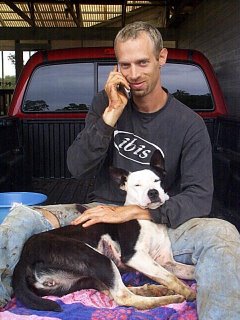
I was discovering a duck sitting a nest in the high grass
when the missing dog burst out of the woods, raced down the hill
for Jamie who found the bleeding gash below her ribs. I followed
with hydrogen peroxide, but we could see she needed more:
we shaved around the wound, swabbed Blu-Kote in and out, and
while Jamie held, I managed two stitches with a curved needle
and the upholstery thread I earlier used on the canvas ottoman.
Mia's brave; we managed. She's resting in Jamie's bloodied lap.
when the missing dog burst out of the woods, raced down the hill
for Jamie who found the bleeding gash below her ribs. I followed
with hydrogen peroxide, but we could see she needed more:
we shaved around the wound, swabbed Blu-Kote in and out, and
while Jamie held, I managed two stitches with a curved needle
and the upholstery thread I earlier used on the canvas ottoman.
Mia's brave; we managed. She's resting in Jamie's bloodied lap.

15 February 2006
Richard Wilbur
[from Singular Voices edited by Stephen Berg]
Lying
by Richard Wilbur
To claim, at a dead party, to have spotted a grackle,
When in fact you haven’t of late, can do no harm.
Your reputation for saying things of interest
Will not be marred, if you hasten to other topics,
Nor will the delicate web of human trust
Be ruptured by that airy fabrication.
Later, however, talking with toxic zest
Of golf, or taxes, or the rest of it
Where the beaked ladle plies the chuckling ice,
You may enjoy a chill of severance, hearing
Above your head the shrug of unreal wings.
Not that the world is tiresome in itself:
We know what boredom is: it is a dull
Impatience or a fierce velleity,
A champing wish, stalled by our lassitude
To make or do. In the strict sense, of course,
We invent nothing, merely bearing witness
To what each morning brings again to light:
Gold crosses, cornices, astonishment
Of panes, the turbine-vent which natural law
Spins on the grill-end of the diner’s roof,
Then grass and grackles or, at the end of town
In sheen-swept pastureland, the horse’s neck
Clothed with its usual thunder, and the stones
Beginning now to tug their shadows in
And track the air with glitter. All these things
Are there before us; there before we look
Or fail to look; there to be seen or not
By us, as by the bee’s twelve thousand eyes,
According to our means and purposes.
So too with strangeness not to be ignored,
Total eclipse or snow upon the rose,
And so with that more rare conception, nothing.
What is it, after all, but something missed?
It is the water of a dried-up well
Gone to assail the cliffs of Labrador.
There is what galled the arch-negator, sprung
From Hell to probe with intellectual sight
The cells and heavens of a given world
Which he could take but as another prison:
Small wonder that, pretending not to be,
He drifted through the bar-like boles of Eden
In a black mist low creeping, dragging down
And darkening with moody self-absorption
What, when he left it, lifted and, if seen
From the sun’s vantage, seethed with vaulting hues.
Closer to making than the deftest fraud
Is seeing how the catbird’s tail was made
To counterpoise, on the mock-orange spray,
Its light, up-tilted spine; or, lighter still,
How the shucked tunic of an onion, brushed
To one side on a backlit chopping-board
And rocked by trifling currents, prints and prints
Its bright, ribbed shadow like a flapping sail.
Odd that a thing is most itself when likened:
The eye mists over, basil hints of clove,
The river glazes toward the dam and spills
To the drubbed rocks below its crashing cullet,
And in the barnyard near the sawdust-pile
Some great thing is tormented. Either it is
A tarp torn loose and in the groaning wind
Now puffed, now flattened, or a hip-shot beast
Which tries again, and once again, to rise.
What, though for pain there is no other word,
Finds pleasure in the cruellest simile?
It is something in us like the catbird’s song
From neighbor bushes in the grey of morning
That, harsh or sweet, and of its own accord,
Proclaims its many kin. It is a chant
Of the first springs, and it is tributary
To the great lies told with the eyes half-shut
That have the truth in view: the tale of Chiron
Who, with sage head, wild heart, and planted hoof
Instructed brute Achilles in the lyre,
Or of the garden where we first mislaid
Simplicity of wish and will, forgetting
Out of what cognate splendor all things came
To take their scattering names; and nonetheless
That matter of a baggage-train surprised
By a few Gascons in the Pyrenees—
Which having worked three centuries and more
In the dark caves of France, poured out at last
The blood of Roland, who to Charles his king
And to the dove that hatched the dovetailed world
Was faithful unto death, and shamed the Devil.
Wilbur has this to say about the poem:
Makes me think of Emily Dickinson's approach to high subjects.
Lying
by Richard Wilbur
To claim, at a dead party, to have spotted a grackle,
When in fact you haven’t of late, can do no harm.
Your reputation for saying things of interest
Will not be marred, if you hasten to other topics,
Nor will the delicate web of human trust
Be ruptured by that airy fabrication.
Later, however, talking with toxic zest
Of golf, or taxes, or the rest of it
Where the beaked ladle plies the chuckling ice,
You may enjoy a chill of severance, hearing
Above your head the shrug of unreal wings.
Not that the world is tiresome in itself:
We know what boredom is: it is a dull
Impatience or a fierce velleity,
A champing wish, stalled by our lassitude
To make or do. In the strict sense, of course,
We invent nothing, merely bearing witness
To what each morning brings again to light:
Gold crosses, cornices, astonishment
Of panes, the turbine-vent which natural law
Spins on the grill-end of the diner’s roof,
Then grass and grackles or, at the end of town
In sheen-swept pastureland, the horse’s neck
Clothed with its usual thunder, and the stones
Beginning now to tug their shadows in
And track the air with glitter. All these things
Are there before us; there before we look
Or fail to look; there to be seen or not
By us, as by the bee’s twelve thousand eyes,
According to our means and purposes.
So too with strangeness not to be ignored,
Total eclipse or snow upon the rose,
And so with that more rare conception, nothing.
What is it, after all, but something missed?
It is the water of a dried-up well
Gone to assail the cliffs of Labrador.
There is what galled the arch-negator, sprung
From Hell to probe with intellectual sight
The cells and heavens of a given world
Which he could take but as another prison:
Small wonder that, pretending not to be,
He drifted through the bar-like boles of Eden
In a black mist low creeping, dragging down
And darkening with moody self-absorption
What, when he left it, lifted and, if seen
From the sun’s vantage, seethed with vaulting hues.
Closer to making than the deftest fraud
Is seeing how the catbird’s tail was made
To counterpoise, on the mock-orange spray,
Its light, up-tilted spine; or, lighter still,
How the shucked tunic of an onion, brushed
To one side on a backlit chopping-board
And rocked by trifling currents, prints and prints
Its bright, ribbed shadow like a flapping sail.
Odd that a thing is most itself when likened:
The eye mists over, basil hints of clove,
The river glazes toward the dam and spills
To the drubbed rocks below its crashing cullet,
And in the barnyard near the sawdust-pile
Some great thing is tormented. Either it is
A tarp torn loose and in the groaning wind
Now puffed, now flattened, or a hip-shot beast
Which tries again, and once again, to rise.
What, though for pain there is no other word,
Finds pleasure in the cruellest simile?
It is something in us like the catbird’s song
From neighbor bushes in the grey of morning
That, harsh or sweet, and of its own accord,
Proclaims its many kin. It is a chant
Of the first springs, and it is tributary
To the great lies told with the eyes half-shut
That have the truth in view: the tale of Chiron
Who, with sage head, wild heart, and planted hoof
Instructed brute Achilles in the lyre,
Or of the garden where we first mislaid
Simplicity of wish and will, forgetting
Out of what cognate splendor all things came
To take their scattering names; and nonetheless
That matter of a baggage-train surprised
By a few Gascons in the Pyrenees—
Which having worked three centuries and more
In the dark caves of France, poured out at last
The blood of Roland, who to Charles his king
And to the dove that hatched the dovetailed world
Was faithful unto death, and shamed the Devil.
Wilbur has this to say about the poem:
What I’m sure of is that a high subject, unless perhaps one is writing a hymn, should not be approached with remorseless nobility, and this poem has its comic elements, as many of mine do. Comedy is serious; it is the voice of balance; and its presence in a serious poem is a test and earnest of its earnestness.
Makes me think of Emily Dickinson's approach to high subjects.
08 February 2006
Richard Hugo
[from Singular Voices: American Poetry Today, edited by Stephen Berg]
I dedicate this poem to Beverly Jackson.
Green Stone
All stones have luck built in. Some
a lucky line that curves a weak green back
into some age prehuman. If stones
could talk they’d tell us how they’ve survived.
They’ve been used in beautiful fences,
been weapons hurled.
The luck of a stone is part of that stone.
It’s not mystical, does not exist just on
the stone like a spell put there by some spirit
in some awkward moment—say the picnic’s
on the verge of disaster, then good wine opened
and the sun suddenly out, and oh the laughter.
But why am I digressing?
These things have nothing to do with stone luck.
I’m speaking real stones. You understand.
Rocks. Not symbols for testicles and not
some lay philosopher’s metaphysical notion
of an indestructible truth. Real stones, the ones
you find lining ocean floors or creek beds
or lying lonely on roads. Probable colors:
blue, yellow, gray, red, green, white or brown.
The luck of each is the same but each suited
to a different situation. That’s why December,
told I was dying of cancer
I picked up a green stone I liked the look of
and carried it in my pocket.
I fondled it just before I took the plane to Seattle.
I kissed it often, both sides before the plane took off,
before biopsy, before major surgery. And now
that surgery seems to have gotten every flake
of sick tissue, I keep the stone on a ledge,
where every morning the sun warms the stone.
When I’m totally recovered, another three months
they say, I’ll throw the stone back where I found it.
I won’t tell you where that is.
The same rock would not work for you no matter
how trivial your problem, how little
luck you need. Please know
I want your life to go on same as mine.
It’s just essential you find your own stone.
It lies somewhere near you now, innocent,
and your eye will spot it in one right moment.
You must hold it close to your ear, and
when it speaks to you, you must respond.
I dedicate this poem to Beverly Jackson.
Green Stone
All stones have luck built in. Some
a lucky line that curves a weak green back
into some age prehuman. If stones
could talk they’d tell us how they’ve survived.
They’ve been used in beautiful fences,
been weapons hurled.
The luck of a stone is part of that stone.
It’s not mystical, does not exist just on
the stone like a spell put there by some spirit
in some awkward moment—say the picnic’s
on the verge of disaster, then good wine opened
and the sun suddenly out, and oh the laughter.
But why am I digressing?
These things have nothing to do with stone luck.
I’m speaking real stones. You understand.
Rocks. Not symbols for testicles and not
some lay philosopher’s metaphysical notion
of an indestructible truth. Real stones, the ones
you find lining ocean floors or creek beds
or lying lonely on roads. Probable colors:
blue, yellow, gray, red, green, white or brown.
The luck of each is the same but each suited
to a different situation. That’s why December,
told I was dying of cancer
I picked up a green stone I liked the look of
and carried it in my pocket.
I fondled it just before I took the plane to Seattle.
I kissed it often, both sides before the plane took off,
before biopsy, before major surgery. And now
that surgery seems to have gotten every flake
of sick tissue, I keep the stone on a ledge,
where every morning the sun warms the stone.
When I’m totally recovered, another three months
they say, I’ll throw the stone back where I found it.
I won’t tell you where that is.
The same rock would not work for you no matter
how trivial your problem, how little
luck you need. Please know
I want your life to go on same as mine.
It’s just essential you find your own stone.
It lies somewhere near you now, innocent,
and your eye will spot it in one right moment.
You must hold it close to your ear, and
when it speaks to you, you must respond.
Stanley Kunitz
From his Paris Review interview:
The best people I know are inadequate and unashamed.
[The full interview is not yet online but expected before too long. Most interviews before 1980 are available here.]
The best people I know are inadequate and unashamed.
[The full interview is not yet online but expected before too long. Most interviews before 1980 are available here.]
my life on the farm
has reduced to this (and everything else I'm not telling):
- every day twice I ride my bicycle up the steep driveway
- every day I memorize an Emily Dickinson poem
i'm on day four
Low to my problem bending,
Another problem comes --
Larger than mine -- serener --
Involving statelier sums.
I check my busy pencil,
my figures file away.
Wherefore, my baffled fingers
Thy perplexity?
how many days will I do this?
- every day twice I ride my bicycle up the steep driveway
- every day I memorize an Emily Dickinson poem
i'm on day four
Low to my problem bending,
Another problem comes --
Larger than mine -- serener --
Involving statelier sums.
I check my busy pencil,
my figures file away.
Wherefore, my baffled fingers
Thy perplexity?
how many days will I do this?
07 February 2006
John Keats
On the Sea
It keeps eternal whisperings around
Desolate shores,—and with its mighty swell
Gluts twice ten thousand caverns,—till the spell
Of Hecate leaves them their old shadowy sound.
Often ’tis in such gentle temper found,
That scarcely will the very smallest shell
Be lightly moved, from where it sometime fell,
When last the winds of heaven were unbound.
Ye, that have your eye-balls vex’d and tired,
Feast them upon the wideness of the sea;—
Or are your hearts disturb’d with uproar rude,
Or fed too much with cloying melody,—
Sit ye near some old cavern’s mouth and brood
Until ye start, as if the sea nymphs quired.
--
[from a letter to the Reynolds sisters, 1817]
Respects to Mrs Dilk saying . . . that had I remained at Hampstead I would have made precious havoc with her house and furniture — drawn a great harrow over her garden — poisoned Boxer — eaten her Cloathes pegs, — fried her Cabbages fricaceed (how is it spelt?) her radishes — ragouted her Onions — belaboured her beet root — outstripped her Scarlet Runners — parlez vous with her french Beans — devoured her Mignon or Mignonette — metamorphosed her Bell handles — splintered her looking glasses — bullock'd at her cups and saucers — agonized her decanters — put old Phillips to pickle in the Brine tub — disorganized her Piano — dislocated her Candlesticks — emptied her wine bins in a fit of despair — turned out her maid to Grass and Astonished Brown — whose Letter to her on these events I would rather see than the original copy of the Book of Genesis.
It keeps eternal whisperings around
Desolate shores,—and with its mighty swell
Gluts twice ten thousand caverns,—till the spell
Of Hecate leaves them their old shadowy sound.
Often ’tis in such gentle temper found,
That scarcely will the very smallest shell
Be lightly moved, from where it sometime fell,
When last the winds of heaven were unbound.
Ye, that have your eye-balls vex’d and tired,
Feast them upon the wideness of the sea;—
Or are your hearts disturb’d with uproar rude,
Or fed too much with cloying melody,—
Sit ye near some old cavern’s mouth and brood
Until ye start, as if the sea nymphs quired.
--
[from a letter to the Reynolds sisters, 1817]
Respects to Mrs Dilk saying . . . that had I remained at Hampstead I would have made precious havoc with her house and furniture — drawn a great harrow over her garden — poisoned Boxer — eaten her Cloathes pegs, — fried her Cabbages fricaceed (how is it spelt?) her radishes — ragouted her Onions — belaboured her beet root — outstripped her Scarlet Runners — parlez vous with her french Beans — devoured her Mignon or Mignonette — metamorphosed her Bell handles — splintered her looking glasses — bullock'd at her cups and saucers — agonized her decanters — put old Phillips to pickle in the Brine tub — disorganized her Piano — dislocated her Candlesticks — emptied her wine bins in a fit of despair — turned out her maid to Grass and Astonished Brown — whose Letter to her on these events I would rather see than the original copy of the Book of Genesis.
06 February 2006
Miranda Field
[from Swallow by Miranda Field]
Then As September Fields of Wheat & Straw Take Fire
What’s withheld till wind parts the grasses:
Musk flooding the air, noxious-sweet — eggshell frail,
the tiny bones of the vole, its velvets stiffened,
pouchful of insects and seeds. Cold stones,
no movement in the tinfoil fallen leaves,
silence in the humus, and shadows on the hill grown long,
the death of the sun, the sun in its brief grave
waiting to be born. The cat hurries a carcass off,
but the deer won’t run through the grove.
They could be painted deer, they stand stock-still,
as if they wait, as if they want the gun, the sight’s
devotion: Such attentiveness is like a hot gold rush
of air from another content. And the jaws of stupefaction
can’t release what they close on, the fears that hound
the hunter’s child: who climbs the larcenous ladder to the shelf
is caught by the foot . . . The deer’s children — all spring long
they come so close to the windows they startle
themselves against the glass. They let us watch them
because it warms them, as when my milk won’t come
my newborn thrives on my look — undiluted, nourishing.
Body entering all awe, all shock, who’d hobble you,
who’d bleed you of your want? The striding
shadows on the hill grow long, the hunters anxious —
not hunger driving them, not prescience of winter,
but nostalgia — for the fall about to start, that trapdoor in the air:
ardor to elegy. The painter arranges the deer in the wood.
Ripe fruit. Ready. So rich, so wet the palette.
Blood and iodine, desire and its attendant
damage. The hunter’s gun is loaded. The heart of the hunter
heavy as the hunted’s. And the chambers divided:
I & thou. And the passage narrow.
Then As September Fields of Wheat & Straw Take Fire
What’s withheld till wind parts the grasses:
Musk flooding the air, noxious-sweet — eggshell frail,
the tiny bones of the vole, its velvets stiffened,
pouchful of insects and seeds. Cold stones,
no movement in the tinfoil fallen leaves,
silence in the humus, and shadows on the hill grown long,
the death of the sun, the sun in its brief grave
waiting to be born. The cat hurries a carcass off,
but the deer won’t run through the grove.
They could be painted deer, they stand stock-still,
as if they wait, as if they want the gun, the sight’s
devotion: Such attentiveness is like a hot gold rush
of air from another content. And the jaws of stupefaction
can’t release what they close on, the fears that hound
the hunter’s child: who climbs the larcenous ladder to the shelf
is caught by the foot . . . The deer’s children — all spring long
they come so close to the windows they startle
themselves against the glass. They let us watch them
because it warms them, as when my milk won’t come
my newborn thrives on my look — undiluted, nourishing.
Body entering all awe, all shock, who’d hobble you,
who’d bleed you of your want? The striding
shadows on the hill grow long, the hunters anxious —
not hunger driving them, not prescience of winter,
but nostalgia — for the fall about to start, that trapdoor in the air:
ardor to elegy. The painter arranges the deer in the wood.
Ripe fruit. Ready. So rich, so wet the palette.
Blood and iodine, desire and its attendant
damage. The hunter’s gun is loaded. The heart of the hunter
heavy as the hunted’s. And the chambers divided:
I & thou. And the passage narrow.
03 February 2006
Goatfoot, Milktongue, Twinbird
[from Goatfoot, Milktongue, Twinbird by Donald Hall]
A poem is one inside talking to another inside. . . .
Lyric poetry, typically, has one goal and one message, which is to urge the condition of inwardness, the inside from which its own structure derives. . . .
the old distinction between vates and poiein. The poiein, from the Greek verb for making or doing, becomes the poet—the master of craft, the maker of the labyrinth of epic or tragedy or lyric hymn, tale-teller and spell-binder. The vates is bound in a spell. He is the rhapsode Socrates patronizes in Ion. In his purest form he utters what he does not understand at all . . . He is the visionary, divinely inspired . . .
There is no poiein for the same reason there is no vates . . . the distinction becomes trivial when we discover the psychic origins of poetic form . . .
Yeats said that the finished poem made a sound like the click of the lid on a perfectly made box. . . . the poet improvises toward that click . . . pleasure in resolution is Twinbird. . . . a poem . . . exists as a sensual body . . . reaches us through our mouths . . . and in the muscles of our legs . . . These pleasures are Milktongue and Goatfoot . . .
From the earliest times, poetry has existed in order to retrieve, to find again, and to release. In the poet who writes the poem, in the reader who lives it again, in the ideas, the wit, the images, the doctrines, the exhortations, the laments and the cries of joy, the lost forest struggles to be born again inside the word. The life of urge and instinct, that rages and coos, kicks and frolics, as it chooses only without choosing—this life is the life the poem grows from, and reconstitutes.
A poem is one inside talking to another inside. . . .
Lyric poetry, typically, has one goal and one message, which is to urge the condition of inwardness, the inside from which its own structure derives. . . .
the old distinction between vates and poiein. The poiein, from the Greek verb for making or doing, becomes the poet—the master of craft, the maker of the labyrinth of epic or tragedy or lyric hymn, tale-teller and spell-binder. The vates is bound in a spell. He is the rhapsode Socrates patronizes in Ion. In his purest form he utters what he does not understand at all . . . He is the visionary, divinely inspired . . .
There is no poiein for the same reason there is no vates . . . the distinction becomes trivial when we discover the psychic origins of poetic form . . .
Yeats said that the finished poem made a sound like the click of the lid on a perfectly made box. . . . the poet improvises toward that click . . . pleasure in resolution is Twinbird. . . . a poem . . . exists as a sensual body . . . reaches us through our mouths . . . and in the muscles of our legs . . . These pleasures are Milktongue and Goatfoot . . .
From the earliest times, poetry has existed in order to retrieve, to find again, and to release. In the poet who writes the poem, in the reader who lives it again, in the ideas, the wit, the images, the doctrines, the exhortations, the laments and the cries of joy, the lost forest struggles to be born again inside the word. The life of urge and instinct, that rages and coos, kicks and frolics, as it chooses only without choosing—this life is the life the poem grows from, and reconstitutes.
02 February 2006
Suzanne Buffam
[from Past Imperfect by Suzanne Buffam]
House
We’ve found a hospital. The sick are missing
limbs, eyes, buttons, pins, and have been welcomed
for today back to the game.
They wait all day to see the doctor,
propped against the mantelpiece, above
the tinderbox that has been turned
into a gurney for a child, overlooked
while we look for the clock. We are not
interested in plot. Our pleasure’s
in the furniture, a rearranging of the rooms
inside the head. The doctor waits
to see the lady with the nickname
appliquéd across the bodice of her spangled
fitted dress. He’ll wait all day.
No one decided this. We simply
know it as we did not know
before we opened it — before it
opened us. There is a room inside the room
inside the room we find by wanting
it, in which a single, unplugged lamp
stands in for light.
House
We’ve found a hospital. The sick are missing
limbs, eyes, buttons, pins, and have been welcomed
for today back to the game.
They wait all day to see the doctor,
propped against the mantelpiece, above
the tinderbox that has been turned
into a gurney for a child, overlooked
while we look for the clock. We are not
interested in plot. Our pleasure’s
in the furniture, a rearranging of the rooms
inside the head. The doctor waits
to see the lady with the nickname
appliquéd across the bodice of her spangled
fitted dress. He’ll wait all day.
No one decided this. We simply
know it as we did not know
before we opened it — before it
opened us. There is a room inside the room
inside the room we find by wanting
it, in which a single, unplugged lamp
stands in for light.
01 February 2006
Srikanth Reddy
[from Facts for Visitors by Srikanth Reddy]
Corruption
I am about to recite a psalm that I know. Before I begin, my expectation extends over the entire psalm. Once I have begun, the words I have said remove themselves from expectation & are now held in memory while those yet to be said remain waiting in expectation. The present is a word for only those words which I am now saying. As I speak, the present moves across the length of the psalm, which I mark for you with my fingers in the psalm book. The psalm is written in India ink, the oldest ink known to mankind. Every ink is made up of a color & a vehicle. With India ink, the color is carbon & the vehicle, water. Life on our planet is also composed of carbon & water. In the history of ink, which is rapidly coming to an end, the ancient world turns from the use of India ink to adopt sepia. Sepia is made from the octopus, the squid & the cuttlefish. One curious property of the cuttlefish is that, once dead, its body begins to glow. This mild phosphorescence reaches its greatest intensity a few days after death, then ebbs away as the body decays. You can read by this light.
Corruption
I am about to recite a psalm that I know. Before I begin, my expectation extends over the entire psalm. Once I have begun, the words I have said remove themselves from expectation & are now held in memory while those yet to be said remain waiting in expectation. The present is a word for only those words which I am now saying. As I speak, the present moves across the length of the psalm, which I mark for you with my fingers in the psalm book. The psalm is written in India ink, the oldest ink known to mankind. Every ink is made up of a color & a vehicle. With India ink, the color is carbon & the vehicle, water. Life on our planet is also composed of carbon & water. In the history of ink, which is rapidly coming to an end, the ancient world turns from the use of India ink to adopt sepia. Sepia is made from the octopus, the squid & the cuttlefish. One curious property of the cuttlefish is that, once dead, its body begins to glow. This mild phosphorescence reaches its greatest intensity a few days after death, then ebbs away as the body decays. You can read by this light.
31 January 2006
30 January 2006
Denise Levertov
[from O Taste and See by Denise Levertov]
Song for Ishtar
The moon is a sow
and grunts in my throat
Her great shining shines through me
so the mud of my hollow gleams
and breaks in silver bubbles
She is a sow
And I a pig and a poet
When she opens her white
lips to devour me I bite back
and laughter rocks the moon
In the black of desire
we rock and grunt, grunt and
shine
Song for Ishtar
The moon is a sow
and grunts in my throat
Her great shining shines through me
so the mud of my hollow gleams
and breaks in silver bubbles
She is a sow
And I a pig and a poet
When she opens her white
lips to devour me I bite back
and laughter rocks the moon
In the black of desire
we rock and grunt, grunt and
shine
Jack Gilbert
[from Refusing Heaven by Jack Gilbert]
Put Her in the Fields for Kindness
The door was in the whitewashed eight-foot walls
of the narrow back street common to Greek islands.
Beautiful light and shade in the clear air.
The big iron bolt was on the outside locking
something in. Some days the pounding inside
made the heavy wooden door shudder. Often a voice
screaming. The crazy old woman, people said.
She would hurt the children if they let her out.
Pinch them or scare them, they said.
Sometimes everything was still and I would delay
until I heard the tiny whimper that meant she knew
I was there. Late one afternoon on my way for oil,
the door was broken. She was in the lot opposite
in weeds by the wall, her dress pulled up, pissing.
Like a cow. Able to manage, quiet in the last light.
Put Her in the Fields for Kindness
The door was in the whitewashed eight-foot walls
of the narrow back street common to Greek islands.
Beautiful light and shade in the clear air.
The big iron bolt was on the outside locking
something in. Some days the pounding inside
made the heavy wooden door shudder. Often a voice
screaming. The crazy old woman, people said.
She would hurt the children if they let her out.
Pinch them or scare them, they said.
Sometimes everything was still and I would delay
until I heard the tiny whimper that meant she knew
I was there. Late one afternoon on my way for oil,
the door was broken. She was in the lot opposite
in weeds by the wall, her dress pulled up, pissing.
Like a cow. Able to manage, quiet in the last light.
29 January 2006
Marie Ponsot
[from Springing: New and Selected Poems by Marie Ponsot]
Entranced
1
For openers
any wall has doors in it.
Openers who want
a door (not for air
but for passing through)
open & shut it
forcefully, under
heavy pressure
from the atmosphere
outside.
The ideal opener investigates
those osmotic waterfalls
which infiltrate
doorless walls.
2
To enter the enclosure
of the garden
or the citadel
be door, be son
or daughter
to the dearness
of pleasure.
Exits are disclosure.
Making an exit
can unlock you—
the way entrances do—
to being
outgoing.
In verse & reverse
word and worm
both turn.
Entranced
1
For openers
any wall has doors in it.
Openers who want
a door (not for air
but for passing through)
open & shut it
forcefully, under
heavy pressure
from the atmosphere
outside.
The ideal opener investigates
those osmotic waterfalls
which infiltrate
doorless walls.
2
To enter the enclosure
of the garden
or the citadel
be door, be son
or daughter
to the dearness
of pleasure.
Exits are disclosure.
Making an exit
can unlock you—
the way entrances do—
to being
outgoing.
In verse & reverse
word and worm
both turn.
27 January 2006
Emily Dickinson to her sister-in-law
[from Open Me Carefully: Emily Dickinson's Intimate Letters to Susan Huntington Dickinson, edited by Ellen Louise Hart and Martha Nell Smith]
111
Sister,
We both are
Women, and there
is a Will of God –
Could the Dying
confide Death,
there would be no
Dead – Wedlock
is shyer than Death,
Thank you for
Tenderness –
I find it is the only
food that the Will
takes, nor that
from general fingers.
I am glad you go –
It does not remove
you. I seek you
first in Amherst,
then turn my
thoughts without
a Whip – so well
they follow you –
An Hour is a Sea
Between a few, and me –
With them would Harbor
be –
120
Title divine, is mine.
The Wife without
the Sign –
Acute Degree
Conferred on Me –
Empress of Cavalry –
Royal, all but the
Crown –
Betrothed, without
the Swoon
God gives us Women –
When You hold
Garnet to Garnet –
Gold – to Gold –
Born – Bridalled –
Shrouded –
In a Day –
Tri Victory –
“My Husband” –
Women say
Stroking the Melody –
Is this the Way –
Emily –
– both letter-poems from the mid-1860s
111
Sister,
We both are
Women, and there
is a Will of God –
Could the Dying
confide Death,
there would be no
Dead – Wedlock
is shyer than Death,
Thank you for
Tenderness –
I find it is the only
food that the Will
takes, nor that
from general fingers.
I am glad you go –
It does not remove
you. I seek you
first in Amherst,
then turn my
thoughts without
a Whip – so well
they follow you –
An Hour is a Sea
Between a few, and me –
With them would Harbor
be –
120
Title divine, is mine.
The Wife without
the Sign –
Acute Degree
Conferred on Me –
Empress of Cavalry –
Royal, all but the
Crown –
Betrothed, without
the Swoon
God gives us Women –
When You hold
Garnet to Garnet –
Gold – to Gold –
Born – Bridalled –
Shrouded –
In a Day –
Tri Victory –
“My Husband” –
Women say
Stroking the Melody –
Is this the Way –
Emily –
– both letter-poems from the mid-1860s
Gjertrud Schnackenberg
[from Supernatural Love by Gjertrud Schnackenberg]
Snow Melting
Snow melting when I left you, and I took
This fragile bone we'd found in melting snow
Before I left, exposed beside a brook
Where raccoons washed their hands. And this, I know,
Is that raccoon we'd watched for every day.
Though at the time her wild human hand
Had gestured inexplicably, I say
Her meaning now is more than I can stand.
We've reasons, we have reasons, so we say,
For giving love, and for withholding it.
I who would love must marvel at the way
I know aloneness when I'm holding it,
Know near and far as words for live and die,
Know distance, as I'm trying to draw near,
Growing immense, and know, but don't know why,
Things seen up close enlarge, then disappear.
Tonight this small room seems too huge to cross.
And my life is that looming kind of place.
Here, left with this alone, and at a loss
I hold an alien and vacant face
Which shrinks away, and yet is magnified—
More so than I seem able to explain.
Tonight the giant galaxies outside
Are tiny, tiny on my windowpane.
Snow Melting
Snow melting when I left you, and I took
This fragile bone we'd found in melting snow
Before I left, exposed beside a brook
Where raccoons washed their hands. And this, I know,
Is that raccoon we'd watched for every day.
Though at the time her wild human hand
Had gestured inexplicably, I say
Her meaning now is more than I can stand.
We've reasons, we have reasons, so we say,
For giving love, and for withholding it.
I who would love must marvel at the way
I know aloneness when I'm holding it,
Know near and far as words for live and die,
Know distance, as I'm trying to draw near,
Growing immense, and know, but don't know why,
Things seen up close enlarge, then disappear.
Tonight this small room seems too huge to cross.
And my life is that looming kind of place.
Here, left with this alone, and at a loss
I hold an alien and vacant face
Which shrinks away, and yet is magnified—
More so than I seem able to explain.
Tonight the giant galaxies outside
Are tiny, tiny on my windowpane.
26 January 2006
Can you ID author and date?
"I am sure of one sweet shelter, one covert from the storm! The bells are ringing, S—, north, and east, and south, and your own village bell, and the people who love God, are expecting to go to meeting; don't you go S—, not to their meeting, but come with me this morning to the church within in our hearts, where the bells are always ringing, and the Preacher whose name is Love—shall intercede there for us!"
23 January 2006
Wislawa Szymborska
[from View with a Grain of Sand by Wislawa Szymborska, translated from the Polish by Stanislaw Baranczak and Clare Cavanagh]
A Moment in Troy
Little girls—
skinny, resigned
to freckles that won’t go away,
not turning any heads
as they walk across the eyelids of the world,
looking just like Mom or Dad,
and sincerely horrified by it—
in the middle of dinner,
in the middle of a book,
while studying the mirror,
may suddenly be taken off to Troy.
In the grand boudoir of a wink
they all turn into beautiful Helens.
They ascend the royal staircase
in the rustling of silk and admiration.
They feel light. They all know
that beauty equals rest,
that lips mold the speech’s meaning,
and gestures sculpt themselves
in inspired nonchalance.
Their small faces
worth dismissing envoys for
extend proudly on necks
that merit countless sieges.
Those tall, dark movie stars,
their girlfriends’ older brothers,
the teacher from art class,
alas, they must all be slain.
Little girls
observe disaster
from a tower of smiles.
Little girls
wring their hands
in intoxicating mock despair.
Little girls
against a backdrop of destruction,
with flaming towns for tiaras,
in earrings of pandemic lamentation.
Pale and tearless.
Triumphant. Sated with the view.
Dreading only the inevitable
moment of return.
Little girls
returning.
A Moment in Troy
Little girls—
skinny, resigned
to freckles that won’t go away,
not turning any heads
as they walk across the eyelids of the world,
looking just like Mom or Dad,
and sincerely horrified by it—
in the middle of dinner,
in the middle of a book,
while studying the mirror,
may suddenly be taken off to Troy.
In the grand boudoir of a wink
they all turn into beautiful Helens.
They ascend the royal staircase
in the rustling of silk and admiration.
They feel light. They all know
that beauty equals rest,
that lips mold the speech’s meaning,
and gestures sculpt themselves
in inspired nonchalance.
Their small faces
worth dismissing envoys for
extend proudly on necks
that merit countless sieges.
Those tall, dark movie stars,
their girlfriends’ older brothers,
the teacher from art class,
alas, they must all be slain.
Little girls
observe disaster
from a tower of smiles.
Little girls
wring their hands
in intoxicating mock despair.
Little girls
against a backdrop of destruction,
with flaming towns for tiaras,
in earrings of pandemic lamentation.
Pale and tearless.
Triumphant. Sated with the view.
Dreading only the inevitable
moment of return.
Little girls
returning.
20 January 2006
Chris Forhan
[from The Actual Moon, the Actual Stars by Chris Forhan]
The Coast of Oklahoma
Oh to stroll the Oklahoma coast
now that the hollyhock is in bloom and my love has returned
and her hair’s in my tub
and her smudged socks clutter the bedroom floor
and her Subaru leaks its indiscreet spot
of oil in the driveway. All my ripe desire
is plucked—I’m left to think
of what cannot be had and feel its lack
like an intoxicant. Oh to pack
a big picnic and explore
the brackish shallow tidepools
of the Tulsa Gulf, where the skittery sandpiper
makes his earnest rounds, and gulls
wheel and pivot overhead, where after a rain
the waves are grayish-blue
and the jagged Alps of Iowa rise
in the north like a kept promise. I miss
already that pebbled stretch of sand
I’ve yet to see, my love
hunched against some salty gust
as she tests the water with a naked foot. O
Oklahoma shore, the mere thought of you
is enough to render charmless
the Hanging Gardens of Utah
and shame Orlando’s grand canals.
The Coast of Oklahoma
Oh to stroll the Oklahoma coast
now that the hollyhock is in bloom and my love has returned
and her hair’s in my tub
and her smudged socks clutter the bedroom floor
and her Subaru leaks its indiscreet spot
of oil in the driveway. All my ripe desire
is plucked—I’m left to think
of what cannot be had and feel its lack
like an intoxicant. Oh to pack
a big picnic and explore
the brackish shallow tidepools
of the Tulsa Gulf, where the skittery sandpiper
makes his earnest rounds, and gulls
wheel and pivot overhead, where after a rain
the waves are grayish-blue
and the jagged Alps of Iowa rise
in the north like a kept promise. I miss
already that pebbled stretch of sand
I’ve yet to see, my love
hunched against some salty gust
as she tests the water with a naked foot. O
Oklahoma shore, the mere thought of you
is enough to render charmless
the Hanging Gardens of Utah
and shame Orlando’s grand canals.
19 January 2006
The Quintus Horatius Flaccus MFA
[from Book Two, Epistle III, To the Pisos]
The Art of Poetry:
Notes for Aspiring Poets and Playwrights
. . . "Poets and painters," you say,
"Have the right to do whatever they dare to do."
Well, yes.
. . . whatever the work is supposed to be,
Let it be true to itself, essentially simple.
. . . Aspiring writer, be sure to be careful to pick
Material that you're strong enough to handle . . .
The man who does this will find he doesn't have trouble
Thinking of what to say and in what order.
Order's important: the virtue and beauty
. . . often
Depends on the author having judiciously chosen
To say the thing that ought to be said right now,
And keeping other things back for later on,
Favoring one thing over against another.
. . . And do it very carefully, you can work it
So that the context makes a word that's worn
From being too familiar seem brand-new
. . . don't attempt to overdo it
. . . He does much better who doesn't
Try so hard . . .
His aim is light from smoke, not smoke from fire
. . . He goes right to the point and carries the reader
Into the midst of things, as if known already;
And if there's material that he despairs of presenting
So as to shine for us, he leaves it out . . .
Beginning, middle, and end, all fit together.
. . . As for instruction, make it succinct, so the mind
Can quickly seize on what's being taught and hold it;
Every superfluous word spills out of a full mind
. . . in what you invent stay close
To actuality . . .
Produce no human babies from monsters' bellies
The Art of Poetry:
Notes for Aspiring Poets and Playwrights
. . . "Poets and painters," you say,
"Have the right to do whatever they dare to do."
Well, yes.
. . . whatever the work is supposed to be,
Let it be true to itself, essentially simple.
. . . Aspiring writer, be sure to be careful to pick
Material that you're strong enough to handle . . .
The man who does this will find he doesn't have trouble
Thinking of what to say and in what order.
Order's important: the virtue and beauty
. . . often
Depends on the author having judiciously chosen
To say the thing that ought to be said right now,
And keeping other things back for later on,
Favoring one thing over against another.
. . . And do it very carefully, you can work it
So that the context makes a word that's worn
From being too familiar seem brand-new
. . . don't attempt to overdo it
. . . He does much better who doesn't
Try so hard . . .
His aim is light from smoke, not smoke from fire
. . . He goes right to the point and carries the reader
Into the midst of things, as if known already;
And if there's material that he despairs of presenting
So as to shine for us, he leaves it out . . .
Beginning, middle, and end, all fit together.
. . . As for instruction, make it succinct, so the mind
Can quickly seize on what's being taught and hold it;
Every superfluous word spills out of a full mind
. . . in what you invent stay close
To actuality . . .
Produce no human babies from monsters' bellies
15 January 2006
Chase Twichell
[from Dog Language, 2005]
The Myths
by Chase Twichell
Italy and Greece lay in ruins,
inhabited by beasts: the Minotaur
in his labyrinth, the scrush of his hide
against its walls; the blinded Cyclops
groping for Ulysses among the sheep.
Dad taught us all the myths.
Up on Mount Olympus
people disguised themselves
as animals. It was like that then.
It's not like that now.
Back then you were half animal
if your father was a god.
The Myths
by Chase Twichell
Italy and Greece lay in ruins,
inhabited by beasts: the Minotaur
in his labyrinth, the scrush of his hide
against its walls; the blinded Cyclops
groping for Ulysses among the sheep.
Dad taught us all the myths.
Up on Mount Olympus
people disguised themselves
as animals. It was like that then.
It's not like that now.
Back then you were half animal
if your father was a god.
Denise Levertov
[from Candles in Babylon, 1982]
She and the Muse
by Denise Levertov
Away he goes, the hour’s delightful hero,
arrivederci: and his horse clatters
out of the courtyard, raising
a flurry of straw and scattering hens.
He turns in the saddle saving a plumed hat,
his saddlebags are filled with talismans,
mirrors, parchment histories, gifts and stones,
indecipherable clues to destiny.
He rides off in the dustcloud of his own
story, and when he has vanished she
who had stood firm to wave and watch
from the top step, goes in to the cool
flagstoned kitchen, clears honey and milk and bread
off the table, sweeps from the hearth
ashes of last night’s fire, and climbs the stairs
to strip tumbled sheets from her wide bed.
Now the long-desired
visit is over. The heroine
is a scribe. Returned to solitude,
eagerly she re-enters the third room,
the room hung with tapestries, scenes that change
whenever she looks away. Here is her lectern,
here her writing desk. She picks a quill,
dips it, begins to write. But not of him.
She and the Muse
by Denise Levertov
Away he goes, the hour’s delightful hero,
arrivederci: and his horse clatters
out of the courtyard, raising
a flurry of straw and scattering hens.
He turns in the saddle saving a plumed hat,
his saddlebags are filled with talismans,
mirrors, parchment histories, gifts and stones,
indecipherable clues to destiny.
He rides off in the dustcloud of his own
story, and when he has vanished she
who had stood firm to wave and watch
from the top step, goes in to the cool
flagstoned kitchen, clears honey and milk and bread
off the table, sweeps from the hearth
ashes of last night’s fire, and climbs the stairs
to strip tumbled sheets from her wide bed.
Now the long-desired
visit is over. The heroine
is a scribe. Returned to solitude,
eagerly she re-enters the third room,
the room hung with tapestries, scenes that change
whenever she looks away. Here is her lectern,
here her writing desk. She picks a quill,
dips it, begins to write. But not of him.
06 January 2006
Ted Kooser
[from Delights and Shadows by Ted Kooser]
The Necktie
His hands fluttered like birds,
each with a fancy silk ribbon
to weave into their nest,
as he stood at the mirror
dressing for work, waving hello
to himself with his hands.
The Necktie
His hands fluttered like birds,
each with a fancy silk ribbon
to weave into their nest,
as he stood at the mirror
dressing for work, waving hello
to himself with his hands.
05 January 2006
I dedicate this poem to my many friends about to take away a newly-minted MFA
[Maurice Manning from A Companion for Owls]
Advice to Rovers
The service of a hunting shirt, a knife
whose heft is rightly balanced, a tinderbox
that fits the hand—necessities, besides
a horse and difficult geography
for anyone who seeks deliverance
from the measures of the world, the social weave.
Resolve to think in terms more loose. Make plans
to reach Missouri country by the fall,
for instance; and maintain your plan despite
impunity which surely will occur,
likely, in the form of rain or wavering.
The very crudeness of your scheme bespeaks
its strength. You will acquire the look of one
whose enterprise does not depend on gold,
which may include no shoes, long hair, and soot.
You can make salt; you can make peace among
the Indians. Do not disdain your lack
of native lights: you have the moon and stars
and fireflies dancing bright against the dark.
Advice to Rovers
The service of a hunting shirt, a knife
whose heft is rightly balanced, a tinderbox
that fits the hand—necessities, besides
a horse and difficult geography
for anyone who seeks deliverance
from the measures of the world, the social weave.
Resolve to think in terms more loose. Make plans
to reach Missouri country by the fall,
for instance; and maintain your plan despite
impunity which surely will occur,
likely, in the form of rain or wavering.
The very crudeness of your scheme bespeaks
its strength. You will acquire the look of one
whose enterprise does not depend on gold,
which may include no shoes, long hair, and soot.
You can make salt; you can make peace among
the Indians. Do not disdain your lack
of native lights: you have the moon and stars
and fireflies dancing bright against the dark.
04 January 2006
Maurice Manning
[from A Companion for Owls: Being the Commonplace Book of D. Boone Long Hunter, Back Woodsman, &c. by Maurice Manning]
First
Arriving, we walked down as if we were hill-born
and bred to know only hills, so that the end of hills
was surprising, rolling out before us like a woman's
skirts gathered and fanned across her lap, like loosely
folded fabric, like calico: spotted and patchworked
as if some big-fingered god had gently smudged
the world he made. Our horses and our dogs paused.
We had not expected glory and it stopped us dead,
which is not altogether uncommon: Moses spying
Canaan, for example, must have first stood silent
before waving his people ahead, the land smothered
in half shadow, half-light like velvet, and steadied
himself, one hand firm on his staff, the other reaching
to his brow, wiping his gray hair back. So I walked
into Kentucky barefooted and clumsy as if I had
sneaked out of school to cheat my lessons and come
upon a girl waiting for me behind a beech tree,
wondering where on earth I'd been. I stood still
on the invisible line and spit across it onto the new
map, making my first mark, wondering if I could
keep such a dark and bloody secret to myself.
First
Arriving, we walked down as if we were hill-born
and bred to know only hills, so that the end of hills
was surprising, rolling out before us like a woman's
skirts gathered and fanned across her lap, like loosely
folded fabric, like calico: spotted and patchworked
as if some big-fingered god had gently smudged
the world he made. Our horses and our dogs paused.
We had not expected glory and it stopped us dead,
which is not altogether uncommon: Moses spying
Canaan, for example, must have first stood silent
before waving his people ahead, the land smothered
in half shadow, half-light like velvet, and steadied
himself, one hand firm on his staff, the other reaching
to his brow, wiping his gray hair back. So I walked
into Kentucky barefooted and clumsy as if I had
sneaked out of school to cheat my lessons and come
upon a girl waiting for me behind a beech tree,
wondering where on earth I'd been. I stood still
on the invisible line and spit across it onto the new
map, making my first mark, wondering if I could
keep such a dark and bloody secret to myself.
01 January 2006
Bernard Berenson via Forrest Gander
[from A Faithful Existence by Forrest Gander]
Modern art is something with which to think. Bernard Berenson once noted, "A complete life may be one ending in so full an identification with the non-self that there is no self to die."
Modern art is something with which to think. Bernard Berenson once noted, "A complete life may be one ending in so full an identification with the non-self that there is no self to die."
27 December 2005
A. R Ammons: more snow
[from The Snow Poems to which I am currently addicted]
can there be a dwelling for man
with no cock to cry the days
in: I hear from across the lake
in quiet spells
dogs barking or crows cawing: or,
even, though terribly early,
geese going over, high over:
in any case, it is not the
rooster, wing-thubbing and crowing:
do you not miss the biddies:
yellow butterballs
peeping about the hen’s legs
and beak:
do you dwell securely where
there is no cackle to the lay
and no offal dog neither
nothing
good Lord not even a guinea:
I need pig and fowl: company:
and the goat!
what is the flavor
of anything without
the bright-eyed,
astonished,
big-balled billy: or the
fucking sheep: who can do
without it:
The book is still out of print.
can there be a dwelling for man
with no cock to cry the days
in: I hear from across the lake
in quiet spells
dogs barking or crows cawing: or,
even, though terribly early,
geese going over, high over:
in any case, it is not the
rooster, wing-thubbing and crowing:
do you not miss the biddies:
yellow butterballs
peeping about the hen’s legs
and beak:
do you dwell securely where
there is no cackle to the lay
and no offal dog neither
nothing
good Lord not even a guinea:
I need pig and fowl: company:
and the goat!
what is the flavor
of anything without
the bright-eyed,
astonished,
big-balled billy: or the
fucking sheep: who can do
without it:
The book is still out of print.
26 December 2005
Wright to Silko
[from The Delicacy and Strength of Lace: Leslie Marmon Silko & James Wright Letters, edited by Anne Wright]
June 15, 1979
Wright to Silko
I am somewhat taken aback to realize that I have made more or less workable versions of exactly thirty new pieces. At least I have revised them and copied them into a larger notebook. Now they will have to lie there by themselves for a while until they change. They almost always do. A poem is a very odd duck. It goes through changes—in form and color—when you leave it alone patiently, just as surely as a plant does, or an animal, or any other creature. Have you ever read a book by someone which you know has been written too quickly and impatiently and then published too soon? Such books always remind me of tomatoes or oranges that have been picked still green and then squirted full of artificial colors. They look nice on the supermarket shelves, and they taste awful. I remember reading such books and feeling the glands under my chin begin to ache. They made me feel as though I were getting the mumps.
June 15, 1979
Wright to Silko
I am somewhat taken aback to realize that I have made more or less workable versions of exactly thirty new pieces. At least I have revised them and copied them into a larger notebook. Now they will have to lie there by themselves for a while until they change. They almost always do. A poem is a very odd duck. It goes through changes—in form and color—when you leave it alone patiently, just as surely as a plant does, or an animal, or any other creature. Have you ever read a book by someone which you know has been written too quickly and impatiently and then published too soon? Such books always remind me of tomatoes or oranges that have been picked still green and then squirted full of artificial colors. They look nice on the supermarket shelves, and they taste awful. I remember reading such books and feeling the glands under my chin begin to ache. They made me feel as though I were getting the mumps.
A. R. Ammons
Christmas (the phoniness of it) always lands me in a foul mood, so I began reading The Snow Poems by A. R. Ammons. I have read more negative comments on this book than on his others. Naturally, I find The Snow Poems delectable. A few outcroppings:
[from "Ivy, a Winding)"]
at three I realized
that my interpersonal relationships
considered for example as a cottonball
of interweavings and
closeness (a warmth, as of a
mother-centered, father-peripheried
group) were going to be sheared off,
cut through
and that I was going to be a bit of
lint blowing in the irrelevancies of
dissociation: as I grew older
I learned this
more thoroughly:
I write for those who have
no comfort now and will never have any:
I'm delighted that the comfortless are
a minority and
that rosy tales amble otherwise for others:
I'm not making a fuss:
I note the determination:
it is a strict script
written in the injustice of
necessity: I forgive
the injustice, nearly: I no longer cry
to be another, not myself, or seldom:
you who have no comfort are welcome here, here
with the chaff
alongside the abundant reaping, among
the weeds, after the gleaners:
[from "The Hieroglyphic Gathered, the Books"]
would a collection
of clarities
be clearer than a clarity
or as the collection
grew would the
single clarities remain
clear and
a great darkness commence
to surround
or would opposite lobes of clarity
annihilate themselves
into continuum emptiness: . . .
the good of images is
that they make no
statement and the bad
is that they make (evoke)
numberless statements:
[from "Light Falls Shadow and Beam through the Limbo"]
[for you Rush Limbaugh fans]
Light falls shadow and beam through the limbo
limbboughs, short and long mixtures,
lineations,
staff and heading, balling the
boughs, cluster, white bass clefs
churning rotund
thunder and up there sparkling and
bellying out
skeins and scads of treble felicities,
cones and points:
tree as music in the light,
the scoring of the permanent
enchantment,
a presence not regular but hastening
or not like the imagination or
the wind . . .
and though we ourselves see and do not
know what we see and cannot tell why
we are here attracted to enchantment
and scriptures intermingling substance
and light—
The Snow Poems is out of print.
[from "Ivy, a Winding)"]
at three I realized
that my interpersonal relationships
considered for example as a cottonball
of interweavings and
closeness (a warmth, as of a
mother-centered, father-peripheried
group) were going to be sheared off,
cut through
and that I was going to be a bit of
lint blowing in the irrelevancies of
dissociation: as I grew older
I learned this
more thoroughly:
I write for those who have
no comfort now and will never have any:
I'm delighted that the comfortless are
a minority and
that rosy tales amble otherwise for others:
I'm not making a fuss:
I note the determination:
it is a strict script
written in the injustice of
necessity: I forgive
the injustice, nearly: I no longer cry
to be another, not myself, or seldom:
you who have no comfort are welcome here, here
with the chaff
alongside the abundant reaping, among
the weeds, after the gleaners:
[from "The Hieroglyphic Gathered, the Books"]
would a collection
of clarities
be clearer than a clarity
or as the collection
grew would the
single clarities remain
clear and
a great darkness commence
to surround
or would opposite lobes of clarity
annihilate themselves
into continuum emptiness: . . .
the good of images is
that they make no
statement and the bad
is that they make (evoke)
numberless statements:
[from "Light Falls Shadow and Beam through the Limbo"]
[for you Rush Limbaugh fans]
Light falls shadow and beam through the limbo
limbboughs, short and long mixtures,
lineations,
staff and heading, balling the
boughs, cluster, white bass clefs
churning rotund
thunder and up there sparkling and
bellying out
skeins and scads of treble felicities,
cones and points:
tree as music in the light,
the scoring of the permanent
enchantment,
a presence not regular but hastening
or not like the imagination or
the wind . . .
and though we ourselves see and do not
know what we see and cannot tell why
we are here attracted to enchantment
and scriptures intermingling substance
and light—
The Snow Poems is out of print.
24 December 2005
email difficulties
Since December 21st, I have been bombarded with spam to the degree that I may be throwing away good email along with the bad. If you have written to me and received no answer, please try again, email Mike, or post a blog comment.
Thank you.
Thank you.
20 December 2005
critiqued by Virginia Woolf
[Sebastian Sprott offered Hogarth Press (the press belonging to Virginia and Leonard Woolf) the opportunity to publish his novel. This is Virginia Woolf's response.]
25th March 1925
Dear Sebastian,
Your book has interested me very much, but on the whole we don't think we can publish it; though we are extremely sorry not to. My feeling is that you don't get going till rather late -- it seems as if your theme interested you, and not the people; so that in spite of the fact that the end gets an emotion which is quite genuine, it is too late to tell; and as a whole the book is not pulled off. I only give you these criticims as you asked me; honestly, I don't trust myself on other peoples novels, simply because, as I write them myself, I get my eye out. I feel that you ought to stand more on your own feet, and that at present you accept too brilliantly what other people tell you and are afraid of your own observations. But this may well be nonsense. The other point is that the public won't like the theme or understand it, which of course makes it risky from the publishing point of view. But it will be very interesting to see what you write next, though after this plain speaking we have no right to ask you to let us see it. . .
Yours
Virginia Woolf
25th March 1925
Dear Sebastian,
Your book has interested me very much, but on the whole we don't think we can publish it; though we are extremely sorry not to. My feeling is that you don't get going till rather late -- it seems as if your theme interested you, and not the people; so that in spite of the fact that the end gets an emotion which is quite genuine, it is too late to tell; and as a whole the book is not pulled off. I only give you these criticims as you asked me; honestly, I don't trust myself on other peoples novels, simply because, as I write them myself, I get my eye out. I feel that you ought to stand more on your own feet, and that at present you accept too brilliantly what other people tell you and are afraid of your own observations. But this may well be nonsense. The other point is that the public won't like the theme or understand it, which of course makes it risky from the publishing point of view. But it will be very interesting to see what you write next, though after this plain speaking we have no right to ask you to let us see it. . .
Yours
Virginia Woolf
19 December 2005
Stephen Dobyns
[from Best Words Best Order: Essays on Poetry]
Simplistically . . . how I write a poem. I have a number of aural, emotional and intellectual concerns floating with a series of images like flies circling in the center of a room. I repeat the rhythms and sounds in my head, run through the images as if through a tray of slides, and lean against the concerns as one might lean against a closed door.
The poem comes together when I am suddenly able to join these concerns together under the aegis of one idea or feeling. . . . Once the elements are joined, the rough shape of the poem comes very quickly. Then I spend months straightening it out and trying to become entirely conscious of the meaning, while moving the poem away from my personal concerns . . . to a more general concern.
17 December 2005
origins of modern poetry
In Best Words Best Order: Essays on Poetry Stephen Dobyns says Gerard de Nerval “suffered from a psychosis of reference, meaning that he felt all random events were not random but contained symbolic information capable of being understood.” Dobyns also ooldly claims, “It can be argued that all modern European, American and South American poetry derives from this poem" (translated by Laure-Anne Bosselaar and Dobyns):
Golden Verses
Everything is sentient!
Pythagoras
Free-thinker, do you imagine only man can think
When life bursts from everything in this world?
Your freedom lightly disposes of the powers you hold,
But from your intentions, the universe is absent.
In each and every animal respect the active spirit,
To Nature each flower becomes a blossoming soul,
The mystery of love inhabits every metal,
Everything has power over you. “Everything is sentient!”
Fear, in the blind wall, the eye that watches:
Even to matter itself a voice is attached.
Never permit it serve some unworthy need.
Often, in obscure beings, a God lies hidden,
And, like a nascent eye covered by its lid,
A pure spirit swells beneath the skin of stones.
Dobyns goes on to say, “What Baudelaire realized [partly through study of Poe], however, was that the eye in the wall is a projection of the self.”
If you read or write poetry, you must own this book.
Golden Verses
Everything is sentient!
Pythagoras
Free-thinker, do you imagine only man can think
When life bursts from everything in this world?
Your freedom lightly disposes of the powers you hold,
But from your intentions, the universe is absent.
In each and every animal respect the active spirit,
To Nature each flower becomes a blossoming soul,
The mystery of love inhabits every metal,
Everything has power over you. “Everything is sentient!”
Fear, in the blind wall, the eye that watches:
Even to matter itself a voice is attached.
Never permit it serve some unworthy need.
Often, in obscure beings, a God lies hidden,
And, like a nascent eye covered by its lid,
A pure spirit swells beneath the skin of stones.
Dobyns goes on to say, “What Baudelaire realized [partly through study of Poe], however, was that the eye in the wall is a projection of the self.”
If you read or write poetry, you must own this book.
Larry Levis
[A middle fragment of a poem titled “The Letter” from Winter Stars by Larry Levis]
. . . If you want to know, I’m thinking
Of the widow with the wide eyes, Nona Laroche,
who’s dead now, & who for days after the fire,
Could still smell smoke on her clothes. . . .
Some great uncle, if the dead could shrug, & they
Can’t, would say: “They loved fast horses.”
Sometimes I almost believe her soul looks out
of the photograph, almost clears the sill
Of the eyes & comes near; though it does not ever
Move, it holds me while I look at it.
But even today, I can’t conceive of a soul
Without seeing a woman’s body. Specifically,
Yours, undoing the straps of an evening dress
In a convertible, & then lying back, your breasts
Holding that hint of dusk mixed with mint
And the emptiness of dusk. Someone put it
Crudely: to fuck is to know. If that is true,
There’s a corollary: the soul is a canary sent
Into the mines. The convertible is white, & parked
Beneath the black trees shading the river,
Mile after mile. Your dress is off by now,
And when you come, both above & below me,
When you vanish into that one cry which means
Your body is no longer quite your own
And when your face looks like a face stricken
From this world, a saint’s face, your eyes closing
On some final city made entirely
Of light, & only to be unmade by light
Again—at that moment I’m still watching
You—half out of reverence & half because
The scene is distant, like a landscape, & has
Nothing to do with me. Beneath the quiet
Of those trees, & that sky, I imagine
I’m simply a miner in a cave; I imagine the soul
Is something lighter than a girl’s ribbon
I witnessed, one afternoon, as it fell—blue,
Tossed, withered somehow, & singular, at
A friend’s wedding—& then into the river
And swirled away. Do I chip away with my hammer?
Do I, sometimes, sing or recite? Even though
I have to know, in such a darkness, all
The words by heart, I sing. And when I come,
My eyes are closed fast. I smile, under
The earth. They loved fast horses. And someone else
Will have to watch them, grazing on short tufts
Of spring grass beside the riverbank,
When we are gone, when we are light, & grass. . . .
I copied this fragment for Anne Haines, as she prepares to write about the body, and, I venture, the soul.
. . . If you want to know, I’m thinking
Of the widow with the wide eyes, Nona Laroche,
who’s dead now, & who for days after the fire,
Could still smell smoke on her clothes. . . .
Some great uncle, if the dead could shrug, & they
Can’t, would say: “They loved fast horses.”
Sometimes I almost believe her soul looks out
of the photograph, almost clears the sill
Of the eyes & comes near; though it does not ever
Move, it holds me while I look at it.
But even today, I can’t conceive of a soul
Without seeing a woman’s body. Specifically,
Yours, undoing the straps of an evening dress
In a convertible, & then lying back, your breasts
Holding that hint of dusk mixed with mint
And the emptiness of dusk. Someone put it
Crudely: to fuck is to know. If that is true,
There’s a corollary: the soul is a canary sent
Into the mines. The convertible is white, & parked
Beneath the black trees shading the river,
Mile after mile. Your dress is off by now,
And when you come, both above & below me,
When you vanish into that one cry which means
Your body is no longer quite your own
And when your face looks like a face stricken
From this world, a saint’s face, your eyes closing
On some final city made entirely
Of light, & only to be unmade by light
Again—at that moment I’m still watching
You—half out of reverence & half because
The scene is distant, like a landscape, & has
Nothing to do with me. Beneath the quiet
Of those trees, & that sky, I imagine
I’m simply a miner in a cave; I imagine the soul
Is something lighter than a girl’s ribbon
I witnessed, one afternoon, as it fell—blue,
Tossed, withered somehow, & singular, at
A friend’s wedding—& then into the river
And swirled away. Do I chip away with my hammer?
Do I, sometimes, sing or recite? Even though
I have to know, in such a darkness, all
The words by heart, I sing. And when I come,
My eyes are closed fast. I smile, under
The earth. They loved fast horses. And someone else
Will have to watch them, grazing on short tufts
Of spring grass beside the riverbank,
When we are gone, when we are light, & grass. . . .
I copied this fragment for Anne Haines, as she prepares to write about the body, and, I venture, the soul.
15 December 2005
Jean Follain, two translations
Repas
Dans l’assiete blanche
un peu ébréchée
on mange un morceau de viande saignante
la femme assoiffante
on ne la voit plus.
Sur la route bleue
puis qui devient rouge
de grand chiens passent
comme s’ils avaient
moyen d’exister
durant tous les temps
en portant collier à plaque de cuivre
au nom de leur maître
et sans peur de la nuit.
Meal (translated by W. S. Merwin)
From the white plate
somewhat chipped
a piece of bleeding meat is eaten
the wife who made throats run dry
is no more to be seen.
On the blue road
that turns red a bit later
big dogs pass
as though they had
some way of existing
in all seasons
wearing their master’s name
on their brass collars
and with no fear of night.
Meal (translated by Heather McHugh)
From the slightly chipped
white plate
you eat a piece of rare meat
you no longer see
the woman you thirst for.
On the blue road
which then becomes red
large dogs go by
as if they had
a way of surviving
to the end of time
by wearing collars with brass tags
in the name of their master
and not being afraid of the dark.
Dans l’assiete blanche
un peu ébréchée
on mange un morceau de viande saignante
la femme assoiffante
on ne la voit plus.
Sur la route bleue
puis qui devient rouge
de grand chiens passent
comme s’ils avaient
moyen d’exister
durant tous les temps
en portant collier à plaque de cuivre
au nom de leur maître
et sans peur de la nuit.
Meal (translated by W. S. Merwin)
From the white plate
somewhat chipped
a piece of bleeding meat is eaten
the wife who made throats run dry
is no more to be seen.
On the blue road
that turns red a bit later
big dogs pass
as though they had
some way of existing
in all seasons
wearing their master’s name
on their brass collars
and with no fear of night.
Meal (translated by Heather McHugh)
From the slightly chipped
white plate
you eat a piece of rare meat
you no longer see
the woman you thirst for.
On the blue road
which then becomes red
large dogs go by
as if they had
a way of surviving
to the end of time
by wearing collars with brass tags
in the name of their master
and not being afraid of the dark.
13 December 2005
What is art, now?
From Pembroke Magazine, Number 18, 1986: Gerald Bullis assays to paraphrase a segment of Tape for the Turn of the Year, a poem by A. R. Ammons:
my story is not a story—not a narrative of plot, of objective characterization, of theatrical incident—but an improvisatory meditation on how one accepts, or tries to accept, the death of the objective, heroic, guilt-accommodating universe. It is (in a way) a great story, at least in potentia, because it is the story we (meaning “I”) have to tell: that is, it is the only “story” I have to tell, so if it isn’t a great story I will, as if I were Sisyphus, suffer my lostness at home in the telling of it, more or less over and over again, alone; and if it is a great story, you may suffer it with me. It isn’t sequential because the apocalyptic universal stage (with a beginning, middle, and end) fell in. I am in the midst of the rotted shambles and, while I feel that I have a part (perhaps a major one), it isn’t in script, and there is no audience (which makes sense), and so I don’t know what to say, where to go. Yet I do feel that I should perform, if only for the weeds and other nonhuman flora and fauna, and that my performance should be undertaken with integrity and be truthful to some extent—it is impossible to say to what extent—to the ground of my beseeching, which is, all in all, pretty desolate. So my story stands still (yet: persistent) and stirs in itself (law of conservation of energy and matter: natural eurhythmy) like boiling water or hole of maggots. Sometimes when I’m not thinking the old nostalgias seem consistent with these natural miracles; but there isn’t much of that. The deus ex machina went the way of the stage. So what is there to do, to say? The objective stage—that grand mythic superstructure—is gone. Inner resolutions, countermotions, the dialectics of self (interiorized drama) remain: the means where by I may discover peace, may be brought home.
12 December 2005
Alan Michael Parker and friends
Tupelo Press has released a new anthology, The Imaginary Poets, edited by Alan Michael Parker.
In his introduction, Parker writes:
The book is marvelous, one astonishment after another. The works are funny, moving, revelatory. Here's the list of contributors:
In this holiday season, buy one copy of The Imaginary Poets for your favorite poet and another for yourself.
In his introduction, Parker writes:
Translate a poem into English, offer a biography of the poet, and then write a short essay in which the poem, the poet, and the corpus are considered -- and make all of it up, without once indicating you have done so. Thus charged were the twenty-two contributors to this volume, who in response produced poems "translated" from eighteen languages including Dirja, Vietnamese, Yiddish, and even from Egyptian hieroglyphs, poems that may be read in the grand literary tradition of heteronyms and alter egos.
The book is marvelous, one astonishment after another. The works are funny, moving, revelatory. Here's the list of contributors:
Aliki Barnstone
Josh Bell
Laure-Anne Bosselaar
Martha Collins
Annie Finch
Judith Hall
Barbara Hamby
Jennifer Michael Hecht
Garrett Hongo
Andrew Hudgins
David Kirby
Maxine Kumin
Khaled Mattawa
D. A. Powell
Kevin Prufer
Anna Rabinowitz
Victoria Redel
David St. John
Mark Strand
Thom Ward
Rosanna Warren
Eleanor Wilner
In this holiday season, buy one copy of The Imaginary Poets for your favorite poet and another for yourself.
Ted Hughes
[from Ted Hughes: Selected Poems 1957 - 1994]
The Thought-Fox
I imagine this midnight moment’s forest:
Something else is alive
Beside the clock’s loneliness
And this blank page where my fingers move.
Through the window I see no star:
Something more near
Though deeper within darkness
Is entering the loneliness:
Cold, delicately at the dark snow
A fox’s nose touches twig, leaf;
Two eyes serve a movement, that now
And again now, and now, and now
Sets neat prints into the snow
Between trees, and warily a lame
Shadow lags by stump and in hollow
Of a body that is bold to come
Across clearings, an eye,
A widening deepening greenness,
Brilliantly, concentratedly,
Coming about its own business
Till, with a sudden sharp and hot stink of fox
It enters the dark hole of the head.
The window is starless still; the clock ticks,
The page is printed.
The Thought-Fox
I imagine this midnight moment’s forest:
Something else is alive
Beside the clock’s loneliness
And this blank page where my fingers move.
Through the window I see no star:
Something more near
Though deeper within darkness
Is entering the loneliness:
Cold, delicately at the dark snow
A fox’s nose touches twig, leaf;
Two eyes serve a movement, that now
And again now, and now, and now
Sets neat prints into the snow
Between trees, and warily a lame
Shadow lags by stump and in hollow
Of a body that is bold to come
Across clearings, an eye,
A widening deepening greenness,
Brilliantly, concentratedly,
Coming about its own business
Till, with a sudden sharp and hot stink of fox
It enters the dark hole of the head.
The window is starless still; the clock ticks,
The page is printed.
11 December 2005
Carol Peters
Web Meme
-- Google's responses to a search for "Carol needs"
Carol needs assessment information request
Carol needs the song “When Love is Gone”
Carol needs to do her job
Carol needs to be grounded in some very basic things
Carol needs to be developed for future advancement and should seek mentoring from Louise
For Carol the task is merely to recognize a need for information
Carol needs a confidence boost
Carol needs to shut up and let Chad explain
Carol needs the NFBF tax number
Carol needs to find local vendors in Jacksonville that will come
Carol needs our continued help
Carol needs your vote!
Carol, we need to assemble and carefully examine rocks
Carol is meeting the needs of children and young adults
Carol has needs (diary of submission) (not for the faint of heart)
Carol needs feedback from all library managers regarding staff training needs
Carol is well aware of the needs of families that are moving
Carol needs only two parts
A whole new episode of “Carol needs help with the computer!”
Carol DON’T NEED THE MONEY!
Carol needs no introduction
Carol may be the answer to all those needs
Carol talks about the need for storytelling as part of the human experience
Carol needs to see the distribution of mitochondria in cells
Carol will discuss your needs
Carol doesn’t necessarily need a doddering old Scrooge
Carol offers effective solutions
Carol needs a Biology Lesson
Carol needs a changing community
Carol can’t really say that you NEED a root canal in this tooth
Carol needs suggestions for the next meeting
Carol needs to get closer to the target
Carol needs help with a Texas question
Carol needs a cluster of aspens shoved up her ass
Carol needs a new refrigerator
Carol needs a bone marrow transplant
Carol sits handcuffed, needs your help
Carol’s laws need to work
Carol needs to update her website
Carol is not currently enrolled but thinks she needs to look at the option
All Carol needs is a glimmer of hope
Carol needs to learn what is important in this precious life
Carol needs to know that disasters of many kinds can strike right at home
Carol doesn’t need to be endorsed by well-connected top activists
Carol is currently certified at Journeyer level
-- Google's responses to a search for "Carol needs"
Carol needs assessment information request
Carol needs the song “When Love is Gone”
Carol needs to do her job
Carol needs to be grounded in some very basic things
Carol needs to be developed for future advancement and should seek mentoring from Louise
For Carol the task is merely to recognize a need for information
Carol needs a confidence boost
Carol needs to shut up and let Chad explain
Carol needs the NFBF tax number
Carol needs to find local vendors in Jacksonville that will come
Carol needs our continued help
Carol needs your vote!
Carol, we need to assemble and carefully examine rocks
Carol is meeting the needs of children and young adults
Carol has needs (diary of submission) (not for the faint of heart)
Carol needs feedback from all library managers regarding staff training needs
Carol is well aware of the needs of families that are moving
Carol needs only two parts
A whole new episode of “Carol needs help with the computer!”
Carol DON’T NEED THE MONEY!
Carol needs no introduction
Carol may be the answer to all those needs
Carol talks about the need for storytelling as part of the human experience
Carol needs to see the distribution of mitochondria in cells
Carol will discuss your needs
Carol doesn’t necessarily need a doddering old Scrooge
Carol offers effective solutions
Carol needs a Biology Lesson
Carol needs a changing community
Carol can’t really say that you NEED a root canal in this tooth
Carol needs suggestions for the next meeting
Carol needs to get closer to the target
Carol needs help with a Texas question
Carol needs a cluster of aspens shoved up her ass
Carol needs a new refrigerator
Carol needs a bone marrow transplant
Carol sits handcuffed, needs your help
Carol’s laws need to work
Carol needs to update her website
Carol is not currently enrolled but thinks she needs to look at the option
All Carol needs is a glimmer of hope
Carol needs to learn what is important in this precious life
Carol needs to know that disasters of many kinds can strike right at home
Carol doesn’t need to be endorsed by well-connected top activists
Carol is currently certified at Journeyer level
Charles Simic
[from The Voice at 3:00 A.M.: Selected Late and New Poems by Charles Simic]
The Little Pins of Memory
There was a child’s Sunday suit
Pinned to a tailor’s dummy
In a dusty store window.
The store looked closed for years.
I lost my way there once
In a Sunday kind of quiet,
Sunday kind of afternoon light
on a street of red-brick tenements.
How do you like that?
I said to no one.
How do you like that?
I said it again today upon walking.
That street went on forever
And all along I could feel the pins
In my back, prickling
The dark and heavy cloth.
The Little Pins of Memory
There was a child’s Sunday suit
Pinned to a tailor’s dummy
In a dusty store window.
The store looked closed for years.
I lost my way there once
In a Sunday kind of quiet,
Sunday kind of afternoon light
on a street of red-brick tenements.
How do you like that?
I said to no one.
How do you like that?
I said it again today upon walking.
That street went on forever
And all along I could feel the pins
In my back, prickling
The dark and heavy cloth.
02 December 2005
W. D. Snodgrass
Chapter 3 of To Sound Like Yourself: Essays on Poetry carries the title "Disgracing Are Verse: Sense, Censors, Nonsense and Extrasensory Deception".
This is a VERY funny (and thought provoking) chapter. I will give you a taste, but you should buy the book for this chapter alone (the others are also good).
This is a VERY funny (and thought provoking) chapter. I will give you a taste, but you should buy the book for this chapter alone (the others are also good).
I. Codes, Hums and Puns
"Wants pawn term, dare worsted ladle gull hoe lift wetter murder inner ladle cordage honor itch offer lodge dock florist. Disc ladle gull orphan worry ladle cluck wetter putty rat hut, end fur disc raisin, pimple colder ladle rat rotten hut."
Who has so debauched our bedtime story? Everything's encoded into sounds we must decipher and reconstitute! Once we recognize, under this weird linguistic getup, our heroine's little cloak and pretty red hood, we -- like the "wicket woof" himself -- are likely to exclaim, "Wail, wail, wail . . . evanescent ladle rat rotten hut!"
Still, why crack our shins on such a verbal obstacle course? Why traril this phonetically corrupted child with her "burden barter and shirker car keys" through a "dock florist" of puns and echoes to her "groinmurder's cordage." We'll only find the "curl and bloat Thursday woof" is there already, wearing "err groinmurder's nut cup and gnat gun . . . curdle dope inner bet" and "disgracing is verse." And, while the child questions his disguise, why should we be trying to penetrate her linguistic camouflage? "O Grammar . . . Wart bag icy gut! A nervous sausage bag ice! . . . O Grammar, water bag noise! A nervous sore suture anomalous prognosis! . . . O Grammar, water bag mousey gut! A nervous sore suture bag mouse!" Finally, once the "woof" has "ceased pore ladle rat rotten hut and garbled erupt," what makes us whoop with delight at that stern cautionary moral: "Yonder nor surghum stenches shut ladle gulls stopper torque wet strainers"? . . .
The language of Ladle Rat Rotten Hut -- the "Anguish Languish" -- was devised by Professor Howard Chace for the disorientation of folk tales. . . .
Such pranks come natural to poets; their mission, after all, is to create language which means other -- preferably more -- than its everyday, dictionary denotation. For recreation, they mock not only artists they scorn, like Joyce Kilmer, but even -- perhaps especially -- those they admire. Kenneth Koch provided parodies of William Carlos Williams, Robert Frost, even Shakespeare: "Tube heat or nog tube heat: data's congestion." At poets' parties, the favorite amusement has long been to render classics in improbable voices: W. C. Fields reciting "Lycidas," Groucho delivering "Prufrock" -- or, as noted earlier, to sing great poems to outrageous melodies.
01 December 2005
Alice Fulton
Everyone Knows the World Is Ending
by Alice Fulton
Everyone knows the world is ending.
Everyone always thought so, yet
here’s the world. Where fundamentalists flick slideshows
in darkened gyms, flash endtime mess-
ages of bliss, tribulation
through the trembling bleachers: Christ will come
by satellite TV, bearing millenial weather
before plagues of false prophets and real locusts
botch the cosmic climate—which ecologists predict
is already withering from the green-
house effect as fossil fuels seal in
the sun’s heat and acid rains
give lakes the cyanotic blues.
When talk turns this way, my mother speaks in memories,
each thought a focused mote in the apocalypse’s
iridescent fizz. She is trying to restore a world
to glory, but the facts shift with each telling
of her probable gospel. Some stories have been
trinkets in my mind since childhood, yet what clings is not
how she couldn’t go near the sink
for months without tears when her mother died,
or how she feared she wouldn’t get her own
beribboned kindergarten chair, but the grief
in the skull like radium
in lead, and the visible dumb love, like water
in crystal, at one with what holds it. The triumph
of worlds beyond words. Memory entices because ending is
its antonym. We’re here to learn
the earth by heart and everything is crying
mind me, mind me! Yet the brain selects and shimmers
to a hand on skin while numbing the constant
stroke of clothes. Thoughts frame and flash
before the dark snaps back: The dress with lace tiers
she adored and the girl with one just like it,
the night she woke to see my father
walk down the drive and the second she remembered
he had died. So long as we keep chanting the words
those worlds will live, but just
so long, so long, so long. Each instant waves
through our nature and is nothing.
But in the love, the grief, under and above
the mother tongue, a permanence
hums: the steady mysterious
the coherent starlight.
by Alice Fulton
Everyone knows the world is ending.
Everyone always thought so, yet
here’s the world. Where fundamentalists flick slideshows
in darkened gyms, flash endtime mess-
ages of bliss, tribulation
through the trembling bleachers: Christ will come
by satellite TV, bearing millenial weather
before plagues of false prophets and real locusts
botch the cosmic climate—which ecologists predict
is already withering from the green-
house effect as fossil fuels seal in
the sun’s heat and acid rains
give lakes the cyanotic blues.
When talk turns this way, my mother speaks in memories,
each thought a focused mote in the apocalypse’s
iridescent fizz. She is trying to restore a world
to glory, but the facts shift with each telling
of her probable gospel. Some stories have been
trinkets in my mind since childhood, yet what clings is not
how she couldn’t go near the sink
for months without tears when her mother died,
or how she feared she wouldn’t get her own
beribboned kindergarten chair, but the grief
in the skull like radium
in lead, and the visible dumb love, like water
in crystal, at one with what holds it. The triumph
of worlds beyond words. Memory entices because ending is
its antonym. We’re here to learn
the earth by heart and everything is crying
mind me, mind me! Yet the brain selects and shimmers
to a hand on skin while numbing the constant
stroke of clothes. Thoughts frame and flash
before the dark snaps back: The dress with lace tiers
she adored and the girl with one just like it,
the night she woke to see my father
walk down the drive and the second she remembered
he had died. So long as we keep chanting the words
those worlds will live, but just
so long, so long, so long. Each instant waves
through our nature and is nothing.
But in the love, the grief, under and above
the mother tongue, a permanence
hums: the steady mysterious
the coherent starlight.
21 November 2005
Donald Britton
Winter Garden
for Robert Dash
A permanent occasion
Knotted into the clouds: pink, then blue,
Like a baby holding its breath, or colorless
As the gush and pop of conversations
Under water. You feel handed from clasp to clasp,
A concert carried off by the applause.
Other times, half of you is torn
At the performated line and mailed away.
You want to say, "Today, the smithereens
Must fend for themselves,"
And know the ever-skating decimal's joy,
To count on thin ice
Growing thinner by degrees, taking its own
Sweet time and taking us with it,
To navigate magnetic zones in which
Intense ecstatic figures touch, like worlds,
But don't collide, it being their devotion
To depend on you to name for each
A proper sphere. "Today, I turn to silence;
Let the language do the talking."
X the Unknown and his laughable, loveable crew,
The tumbling balconies of one-of-us-is-a-robot-
And-it's-not-me waves
(Spanking a beach so empty
If you weren't around to trip me
Would I really fall?) and days
When the wind is a bridge across our power
To enumerate, to dig, to plant, to hold
And to communicate the twill-and-tweed-
Colored field's coldness
Toward our game of enticing it indoors,
As if we could erect a rival gate to the departure
Whose uniform destination can't surprise,
Is blind, speaks not,
When on those white and sudden afternoons
I take your eyes, and see the sun set twice.
[from Ecstatic Occasions, Expedient Forms: 85 Leading Contemporary Poets Select and Comment on Their Poems, edited by David Lehman]
for Robert Dash
A permanent occasion
Knotted into the clouds: pink, then blue,
Like a baby holding its breath, or colorless
As the gush and pop of conversations
Under water. You feel handed from clasp to clasp,
A concert carried off by the applause.
Other times, half of you is torn
At the performated line and mailed away.
You want to say, "Today, the smithereens
Must fend for themselves,"
And know the ever-skating decimal's joy,
To count on thin ice
Growing thinner by degrees, taking its own
Sweet time and taking us with it,
To navigate magnetic zones in which
Intense ecstatic figures touch, like worlds,
But don't collide, it being their devotion
To depend on you to name for each
A proper sphere. "Today, I turn to silence;
Let the language do the talking."
X the Unknown and his laughable, loveable crew,
The tumbling balconies of one-of-us-is-a-robot-
And-it's-not-me waves
(Spanking a beach so empty
If you weren't around to trip me
Would I really fall?) and days
When the wind is a bridge across our power
To enumerate, to dig, to plant, to hold
And to communicate the twill-and-tweed-
Colored field's coldness
Toward our game of enticing it indoors,
As if we could erect a rival gate to the departure
Whose uniform destination can't surprise,
Is blind, speaks not,
When on those white and sudden afternoons
I take your eyes, and see the sun set twice.
[from Ecstatic Occasions, Expedient Forms: 85 Leading Contemporary Poets Select and Comment on Their Poems, edited by David Lehman]
Subscribe to:
Posts (Atom)