22 July 2012

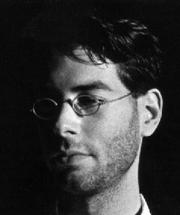
Javier Marías

[from Javier Marías's A Heart So White, tr. Margaret Jull Costa, New Directions, 1992]

Real togetherness in married couples and indeed in any couple comes from words, not just the words that are spoken — spoken involuntarily — but the words one doesn't keep to oneself — at least not without the intervention of the will. It isn't so much that there are no secrets between two people who share a pillow because that's what they decide — what is serious enough to constitute a secret and what is not, if it is not told? — rather it's impossible not to tell, to relate, to comment, to enunciate, as if that were the primordial activity of all couples, at least those who have become couples recently and are still not too lazy to speak to one another. It isn't just that with your head resting on a pillow you tend to remember the past and even your childhood, and that remote and quite insignificant things surface in your memory, come to your tongue, and that all take on a certain value and seem worthy of being recalled out loud; nor that we're disposed to recount our whole life to the person resting their head on our pillow, as if we needed them to be able to see us from the very beginning — especially from the beginning, that is, from childhood — and to witness, through our telling, all those years before they knew us and during which time, we now believe, they were waiting for us. Neither is it simply a desire to compare, to find parallels or coincidences, the desire to know where each of you was in all the different eras of your two existences and to fantasize about the unlikely possibility of having met each other before; lovers always feel that their meeting took place too late, as if the amount of time occupied by their passion was never enough or, in retrospect, never long enough (the present is untrustworthy), or perhaps they can't bear the fact that once there was no passion between them, not even a hint of it, while the two of them were in the world, swept along by its most turbulent currents, and yet with their backs turned to each other, without even knowing one another, perhaps not even wanting to. Nor is it that some kind of interrogatory system is established on a daily basis which, out of weariness or routine, neither partner can escape, and so everyone ends up answering the questions. It's rather that being with someone consists in large measure in thinking out loud, that is, in thinking everything twice rather than once, once with your thoughts and again when you speak, marriage is a narrative institution. Or perhaps it's just that they spend so much time together (however little time that is amongst modern couples, it still amounts to a lot of time) that the two partners (but in particular the man, who feels guilty if he remains silent) have to make use of whatever they think and whatever occurs to them or happens to them in order to amuse the other person; thus, in the end, there's not a single tiny corner of all the events and thoughts in an individual's life that remains untransmitted, or rather translated matrimonially. The events and thoughts of the others are transmitted too, those they've confided to us in private, that's where the expression "pillow talk" comes from, there are no secrets between people who share a bed, the bed is like a confessional. For the sake of love or its essence — telling, informing, announcing, commenting, opining, distracting, listening and laughing, and vainly making plans — one betrays everyone else, friends, parents, brothers and sisters, blood relations and non-blood relations, former lovers and beliefs, former mistresses, your own past and childhood, your own language when you stop speaking it and doubtless your country, everything that anyone holds to be secret or perhaps merely belongs to the past. In order to flatter the person you love you denigrate everything else in existence, you deny and abominate everything in order to content and reassure the one person who could leave you; so great is the power of the territory delineated by the pillow that it excludes from its bosom everything outside it, and it's a territory which, by its very nature, doesn't allow for anything else to be on it except the two partners, or lovers, who in a sense are alone and for that very reason talk and hide nothing — involuntarily. The pillow is round and soft and often white and after a while that roundness and whiteness become a replacement for the world and its weak wheel.

Javier Marías

Margaret Jull Costas

13 July 2012

Steve Shavel

[from Steve Shavel's How Small Brides Survive in Extreme Cold, Verse Press, 2003]

How Small Brides Survive in Extreme Cold [excerpt]

2

Every word occludes another, just as
every perspective cuts across some larger circuitry — logjams
of purposiveness, the whole farrago
of incidence, everything a something
taken out of context, the stunned minnow
in the heron's crop
mouthing the vowels of horror, or the way
you wake up sometimes with a
loded word on the tongue
the odd fragment
of dream cipher (today no
kidding it was tatterdemalion).

But of the mechanism, spring-
wound, that drives these recirculating
waters, disgorged on the hill towns in
last night's storm or unlocked
from the rockface its last
blue icicle integument, trundling
past stubborn milltowns and
former milltowns, their trestles
cantilevers and
crumbling abutments,
their sullen smokestacks,
rosettes of identical split-
level around the cul-de-sac,

sluiced through the archaic reactor
whose lab-coated acolytes
scrutinize the apparatus, tending
the device
its dread core their queen
hived and bloated with light,

turning bend after bend
of perturbation to get here
where the currents slow to spread their snares
and drop their sediment —
we are all of us oblivious,
taken in entirely by the parade
of forms, the events and detritus
that drift across the meniscus of consciousness.
Only the sandpiper it seems
sees past its own reflection —
and the kingfisher, who lunges now
through the shattered pane
to that low strange corridor
its glimpse of minnow where
last year's leaves in a
spectral cortege, lit
with the amber half-light
of the after-life
leach their tannins or settle
little by little a skeletal tracery
into the bottom silt,
thick as the dust of an undisturbed
necropolis.

While above an unseen hand works feverishly
to smooth the sheet of other-being
over the ever-unmade bed of the river.
And while I'm going on like this
a something noses closer through the shallows,
something I didn't notice, nor
he me til
thwack
and recoil
the beaver startled startles back
his blackjack tail on the water's pate
then
thwack again
               KERTHUNK
in spreading rose-windows
of concussion. The Willow-Manitou
looks on and marvels.
An after-sprite of droplets shivers down.

Several weeks now he's been at it
this waterlogged carpetbagger
interloping both the banks up and down.
Daylong the air endures the rasp
and crepitation of his handiwork, a
jigsaw of precision, each chiselled branch
a deftly-placed sprag in the works.

For these two are pitted
here and everywhere
one against the other:
the curving intelligence of river,
the Cartesian architectonic
of the beaver, part iconoclast
breaking the symmetries,
troubling the face of the waters, part
masonic artificer, geometrician,
master anaesthetician, plotting and fretting
to put the river under and
three or four in confederacy
equal to an entire
army corps of engineers.

But for now the river doesn't give a damn.
Rather it is the dam that gives.
And so on and so forth through the spate of May . . .

Steve Shavel
[photo by Jenna Sunshine]

02 July 2012

Daniel Nathan Terry

[from Daniel Nathan Terry's Waxwings, Lethe, 2012]

Photograph, 1984

Swallow this
house — bedroom window paned
like a roadside cross
erected for a reckless boy, wreath
of camera-flare, paper flower of real grief
with too bright a center, edges finally fading
in shoebox weather.
                               You know
what happened there.
                                  You know
this is more than a snap-
shot. Flat as it seems, it will swell
on your red tongue and will become
those rooms — that room with its pale boy
sinking to his knees, again, sinking
into shadowed corners.
                                     Come,
fold into black origami.
                                     Come, unhinge
your jaw like the copperhead you saw
becoming a blackbird in the woods — mouth-first,
then your throat, your white ribs and pink gut.
All that's left of you
                               must muscle through
the flapping wing, thin legs trembling,
one skeletal foot curling inward.
                                                   It's in you now —
the song, the sin, the bones, the room, him
telling you it's alright, and every man does it
when a girl leaves him empty-
handed.
             Swallow this
house, blackbird-who-became a snake. Swallow
this house and keep yourself
                                             from remembering
how to sing.


31 May 2012

Evie Shockley

[from Evie Shockley's The New Black, Wesleyan, 2011]

dear ace bandage,

       the wound is hard to place.
the wound is not your job.
       i thought i needed you, but
things are already tight. you
       are like putty in my hands,
or is my thinking colored?
       flesh tone or dial tone? who
you gonna call? your pretty
       silver broach sets in, holds
you at a tension. could it
       clasp the skin together long
enough for two flaps to re-
       attach? miss match. rematch.
love. ace. deuce. game. open.

dear cuddly dharma,

       you make it easy to say no,
just. i turn a blind eye to
       temptation after staring hard
into your hydrogen smile. we
       spoon, and i hate to stir, but
fetish is always in the mix.
       even fate looks glamorous
by lamplight. spotlight. hot.
       wound or would? would or
wooden? batter batter batter!
       you have a dream of night-
marish proportions. where
       there's a will, there's aweigh.
unanchored. unmoored. off.

dear existential fallacy,

       i need you to be concrete.
you need me to liquidate
       my account. pour, pour me,
with my fluid tale. tail, to
       hear you tell it. fluent in six
currencies. dirty lucre. you
       tracking bills counterfeited
by the page. lyre, lyre, pants
       the town crier. griot. seer.
sikh. psyche. that, baby, went
       out with the dirty dishwasher.
cross my palm with olives:
       i will tell you your pastime.
your passive voice is dated.

dear gift horse,

       open wide. now bite down.
that incident was not an
       accident. don't. act like i'm
stupid. do you come with
       a saddle? which way to
the sunset? that's the thing
       about possibility: it's dark
in there. you can't judge
       an r&b song by its covers.
colors. dolores is blue: why
       must she give up her security
blanket? she's had it since
       she was born. my, what sharp
teeth you have! all the better.

dear ink jet,

       black fast. greasy lightning.
won't smear. won't rub off.
       defense: a visual screen: ask
an octopus (bioaquadooloop).
       footprints faster than a speed-
ing bully, tracking dirt all
       over the page. make every
word count. one. two. iamb.
       octoroon. half-breed. mutt.
mulatto. why are there so few
       hybrids on the road? because
they can't reproduce. trochee
       choking okay mocha. ebony,
by contrast, says so much.

Evie Shockley

10 May 2012

Julie Carr

Julie Carr’s Sarah — of Fragments and Lines, Coffee House, 2012]

Conception Abstracts

                            Heat teems from the meat of the form

      Tame heat if tame form, if maimed form then fierce.
                       Seems eaten, this mate, this timed tenant.


Tenured member of my own passive nature, I tested the
tine of the task. Desperate for some apt rapture, tapped
the lap of the master. Faster. Water and laughter, the
last splatter of summer, later, the hot slap of not
sleeping. Walled by fault, the taut self slipped. And to
what heights after?


[untitled]

In the second week of solid rain, Sarah. You woke at dawn with 
a head of dream. Clover’s fell enthusiasm expands in the 
perpetual bath. Sarah. The lamp suspended in the garden, 
Sarah: Cheshire-like and falsely dear. We make boats of juice 
bottles, houses of cereal boxes, cats of toilet paper, eggs of 
lavender and stone. Sarah. At the festival of water we watch an 
orchestra of children sway to the music of their strings. And in 
your room you succumb. Learn as you are dying how to 
behave like one near dead. As magpie, you are eave-bound, 
acquisitive, indiscriminate. Beak clipping the scraps of your old 
existence, the strings of your future weave, Sarah. As duck you 
are industrious, with a reed in your possession, across pond 
you slide. But here, tatter-head, you are forced into days, 
broken into hours, and those hours mercilessly sliced.

Julie Carr

08 May 2012

Arecelis Girmay

[from Arecelis Girmay's Kingdom Animalia, BOA, 2011]

Small Letter

do not go, this day, the red
of bridges, my little, stay

beside me over
the ruins of san francisco.

go, but do not go
from me, my one,

my love, my very kin
who I laughed with in our sleep

every night, my dream
beside your dream, for a year.

wrecking ball despedida, wreck
the great rooms in my chest & take

my last song, but do not leave me
on this earth, my one

without my one. how would
the hand ever live, if it knew

it would never braid your hair
again, or hold your face?

it would get up & walk
away forever then.

one by one my breaths
would go out looking: a procession

of homeless dogs,
                                                  or clouds


22 March 2012

Robert Duncan

[from Robert Duncan's The H. D. Book, California, 2012]

Threads are spun out and are woven, from event into event. Hands work the dancing shuttles of a close net to make things real, to realize what is happening. A tapestry of a life appears in the mesh of many lives, a play. But just as when we weave a complex of lines a cloud or atmosphere appears, a texture or cloth, something more than the threads told, and out of that texture appear, not only the figures we were translating into our design, but other figures of the ground itself; so a “life” appears in the work itself. The weaving or the painting or the writing is “subjective,” is an act out of however we can do it; the “subject matter” is “objective,” is some thing or event as actual as ourselves which we reach out to capture, to draw into a texture with ourselves. In the medium, our work and this thing become mixed, changed then.  A ground appears as a new condition of what we are doing. . . .

“the mind is upborne upon the emotional surge” [Pound]

There is a threatened chastity of mind in Pound that would put away, not face, the thought of hellish things, here in considering the Divine World, as later in considering fascism, where also he cannot allow that the sublime is complicit, involved in a total structure, with the obscene — what goes on backstage. Spirit in The Cantos will move as a crystal, clean and clear of the muddle, even the filth, of the world and its tasks thru which Psyche works in suffering towards Eros. . . .

The style of the artist, his signature or control, is . . . analogous to his character, the operation of energies in repression, of challenge and attack upon the world about him . . . The grace of the artist is analogous to his nature, a given thing, the operation of energies in freedom, of response and self derivation from the world. Style, being wrested from Nature, is mastery; Grace, being given, is the service. The Art here being to keep alive in one process mastery in service, service in mastery. . . .


Paradise or first Eden survives in its never having yielded satisfaction. A rapture that leaves the poet hungry for rapture.


28 January 2012

João Cabral de Melo Neto

[from João Cabral de Melo Neto's Education by Stone: Selected Poems, tr. Richard Zenith, Archipelago, 2005]

Party at the Manor House [excerpts]
(Congressional rhythm, Northeast accent)


1

– The sugar mill worker
   in a large or small mill
– Is the same mill worker
   with a different rhyme.
– The sugar mill worker
   in a raw mill or refinery:
– "Sugar mill worker"
   is the crucial denominator.
– Any sugar mill worker
   from any Pernambuco:
– When he says "sugar mill worker"
   will have said everything.
– Whatever his name,
   position or salary:
– By saying "sugar mill worker,"
   he will have said it all.

11

– The sugar mill worker
   in female form
– Is an empty sack
   that stands on two feet.
– The female mill worker
   is essentially a sack
– Of sugar without
   any sugar inside.
– The sugar mill worker
   in female form
– Is a sack that cannot
   conserve or contain,
– She's a sack made
   just to be emptied
– Of other sacks made in her
   nobody knows how.

2

– The sugar mill worker
   looks like us from a distance:
– Looking closer one sees
   what sets him apart.
– The sugar mill worker
   up close, to a sharp eye:
– Is in all respects human
   but at half the price.
– He is missing nothing
   that you and I have,
   down to every detail,
   like any normal man.
– He's the same, yet seems
   to have been cut out
   by the dull scissors
   of a third-rate tailor.

7

– The sugar mill worker
   looks like flesh and blood:
– Looking closer one sees
   just what substance he is.
– The mill worker's body
   when actually touched
– Proves to be different,
   of a thinner consistence.
– Its texture is rough
   and at the same time slack,
   like cheap cotton cloth
   or like cotton scraps.
– Like well-worn cloths
   torn and tattered
   to where, in our language
   cloths become rags.

12

– The sugar mill worker
   seems to be of our clay:
– Looking closer one sees
   that his clay was grayer.
– The sugar mill worker
   is shadowy and dim:
– He never learns to shine
   like the sugar mill's steels.
– He can't even shine
   like the duller copper
   of the vats he stirs
   in the smaller mills.
– He never even learns
   to shine like the hoe handles
   he dry polishes daily
   with his sandpaper hand.

13

– The sugar mill worker
   when he's at work:
– Everything he works with
   feels heavy to him.
– It's as if his blood,
   though thinner than ours,
   weighed on his body
   like juice when thick.
– Like sugarcane juice which,
   after much cooking,
   gets thicker and thicker
   until it's molasses.
– The sugar mill worker
   has a heavy rhythm:
– Like the final molasses
   leaving the final vat.

9

– The sugar mill worker
   yellowishly lives
   among all that blue
   which is always Pernambuco.
– Even against the yellow
   of the canefield straw,
   his yellow is still yellower,
   for it reaches his morale.
– The sugar mill worker
   is the quintessential yellow:
– Yellow in his body
   and in his state of mind.
– This explains his calm,
   which can appear as wisdom:
– But it's not calmness at all,
   it's nothingness, inertia.

João Cabral de Melo Neto, 1935

20 December 2011

João Cabral de Melo Neto

[from João Cabral de Melo Neto in Twentieth-Century Latin American Poetry, ed. Stephen Tapscott, Texas, 1996]

Weaving the Morning

1.

One rooster does not weave a morning,
he will always need the other roosters,
one to pick up the shout that he
and toss it to another, another rooster
to pick up the shout that a rooster before him
and toss it to another, and other roosters
with many other roosters to criss-cross
the sun-threads of their rooster-shouts
so that the morning, starting from a frail cobweb,
may go on being woven, among all the roosters.

2.

And growing larger, becoming a cloth,
pitching itself a tent where they all may enter,
inter-unfurling itself for them all, in the tent
(the morning) which soars free of ties and ropes –
the morning, tent of a weave so light
that, woven, it lifts itself through itself: balloon light.

tr. Galway Kinnell

João Cabral de Melo Neto

05 December 2011

Alice Notley

[from Alice Notley's Culture of One, Penguin, 2011]

Culture of One

Marie made things in the gully: she made her life, sure, more than practically anyone else did, but she wrote things down on paper discarded in the dump and she made figures out of wood and rocks and cord and burntness and whatever. The figures didn't really look like anyone, maybe her a little, and the dogs the same color as everything with wolf mouths, I mean coyote.

Every once in a while a kid burned down her shack, while she was out foraging. Then her works both written and made out of stuff would get burnt. She'd start again. She always remembered how to do it.

Where does culture come from? It comes from the materials you do it with.

When she made the shark out of rotting wood, I guess it was just a fish. A carp, probably, but she called it a shark. She put a little woman in its mouth, but it wasn't her; and it wasn't me, whatever I say. It was the wood calling out. It was just some woman, no it wasn't even a woman.

What are you going to do when they burn up your shack? I don't care, it'll still be great here.


17 November 2011

Marianne Boruch

[from Marianne Boruch's Grace, Fallen From, Wesleyan, 2011]

A Moment

Maybe it's common, this sort
of first meeting. But once, before a guest house
in Germany, the friend
of a friend to come by, and dinner –
that's it, we'll go to dinner, have the famous
spargel, that rare white asparagus, only
in May, our evening pre-arranged by phone,
by email. I need to say again we
hadn't met. Outside I stood
at the door, it being spring, every tree
gloriously poised. And a stranger,
another woman, she too waiting
but near the curb, looking
this way and that, attentive to traffic, hours
from dusk because we were north,
near the sea. And tall, she was towering,
older than I was, hugely
made-up, such meticulous work
behind that elegant finish. Then the friend
of my friend – could that be? –his
parking, his pulling himself
out of that tiny car.
Please understand. I'm usually
right there rushing in, because the world
requires that, loves the quickening
of that. But I was
or I wasn't. Or I was small
but there is smaller. To my left, a door.
Some tree flowering at my right.
I watched as he
to that woman said my name
so charmingly, a question, tilting
his head, are you . . . ? sorry to disturb,
are you . . . ? And in that pause –
her vague focusing on him, her loose
finding him now – I leaned forward,
simply curious: what
would she say? smile? yes? tell him yes?
So the thread breaks. So water in a glass
clouds and maybe clears.
So I waited, giving up
everything, to anyone,
just like that.

Marianne Boruch

30 October 2011

Octavio Paz

[from Octavio Paz's The Collected Poems of Octavio Paz: 1957-1987, ed. Eliot Weinberger, New Directions, 1990]

Duration

         "Thunder and wind: duration."
                                              I Ching

I

Sky black
                Yellow earth
The rooster tears the night apart
The water wakes and asks what time it is
The wind wakes and asks for you
A white horse goes by

II

As the forest in its bed of leaves
you sleep in your bed of rain
you sing in your bed of wind
your kiss in your bed of sparks

III

Multiple vehement odor
many-handed body
On an invisible stem a single
whiteness

IV

Speak listen answer me
what the thunderclap
says, the woods
understand

V

I enter by your eyes
you come forth by my mouth
You sleep in my blood
I waken in your head

VI

I will speak to you in stone-language
(answer with a green syllable)
I will speak to you in snow-language
(answer with a fan of bees)
I will speak to you in water-language
(answer with a canoe of lightning)
I will speak to you in blood-language
(answer with a tower of birds)

         – translated by Denise Levertov


Duración

         "Trueno y viento: duración."
                                              I Ching

I

Negro el cielo
                      Amerilla la tierra
El gallo desgarra la noche
El agua se levanta y pregunta la hora
El viento se levanta y pregunta por ti
Pasa un caballo blanco

II

Como el bosque en su lecho de hojas
tú duermes en tu lecho de lluvia
tú cantas en tu lecho de viento
tú besas en tu lecho de chispas

III

Olor vehemencia numerosa
cuerpo de muchas manos
Sobre un tallo invisible
una sola blancura

IV

Habla escucha respóndeme
lo que dice el trueno
lo comprende el bosque

V

Entro por tus ojos
sales por mi boca
Duermes en mi sangre
despierto en tu frente

VI

Te hablaré un lenguaje de piedra
(respondes con un monosílabo verde)
Te hablaré un lenguaje de nieve
(respondes con un abanico de abejas)
Te hablaré un lenguaje de agua
(respondes con una canoa de relámpagos)
Te hablaré un lenguaje de sangre
(respondes con una torre de pájaros)

Octavio Paz, 1936

22 October 2011

César Vallejo

[from César Vallejo's Complete Poetry: A Bilingual Edition, ed./tr. Clayton Eshleman, University of California, 2007]

Distant Footsteps

      My father is asleep. His august face
expresses a peaceful heart;
he is now so sweet . . .
if there is anything bitter in him, it must be me.

      There is loneliness in the house; there is prayer;
and no news of the children today.
My father stirs, sounding
the flight into Egypt, the styptic farewell.
He is now so near;
if there is anything distant in him, it must be me.

      My mother walks in the orchard,
savoring a savor now without savor.
She is so soft,
so wing, so gone, so love.

      There is loneliness in the house with no bustle,
no news, no green, no childhood.
And if there is something broken this afternoon,
something that descends and that creaks,
it is two old white, curved roads.
Down them my heart makes its way on foot.


Los Pasos Lejanos

      Mi padre duerme. Su semblante augusto
figura un apacible corazón;
está ahora tan dulce . . .
si hay algo en él de amargo, seré yo.

      Hay soledad en el hogar; se reza;
y no hay noticias de los hijos hoy.
Mi padre se despierta, ausculta
la huida a Egipto, el restañante adiós.
Está ahora tan cerca;
si hay algo en él de lejos, seré yo.

      Y mi madre pasea allá en los huertos,
saboreando un sabor ya sin sabor.
Está ahora tan suave,
tan ala, tan salida, tan amor.

      Hay soledad en el hogar sin bulla,
sin noticias, sin verde, sin niñez.
Y si hay algo quebrado en esta tarde,
y que baja y que cruje,
son dos viejos caminos blancos, curvos.
Por ellos va mi corazón a pie.

César Vallejo

07 October 2011

Joanna Catherine Scott

[from Joanna Catherine Scott & John Lee Conaway's An Innocent in the House of the Dead, Main Street Rag, 2011]

In Which You Tell Me You Have Set Islam Aside . . .

I used to dream, you say, that one day
I would take a pilgrimage to Mecca,

but I have given Islam up,
I have taken my name off all the lists,

I no longer go to pray.
Although I pray to Allah in my heart,

I thank him for the Qur'an,
which I also have inside my heart.

Get knowledge and understanding,
it instructs me.

And so I read and read and think,
and argue with myself, and others too,

and have become a wiser person
on account of it.

Which is why I have set Islam aside.
What point is there,

I came to understand,
in fighting with an enemy

who has the upper hand?
What point in setting myself up

for persecution by the guards and wardens
because I wear the Muslim cap

and fast for Ramadan?
A man must act upon his wisdom.

So I have set aside the kufi.
I do not abase myself.

I have light within me, though.
They cannot take that away.


. . . And I Drive Home in the Rain

The fallen sky laying itself out
and laying itself out along the road

like grey-clad pilgrims
abasing themselves full-length

and rising,
and then the abasement

and the rising up again,
end-to-ending themselves

like inchworms inching their way
across grey countryside

toward the holy city,
pelted on, and blown up

into a thousand falling fragments
by lumbering grey trucks.

Gathering themselves together.
Shaking off the insult.

Rising and abasing.
Rising and abasing.

And being blessed for it.

That glittering
spinning off the wheels.

Joanna Catherine Scott

16 September 2011

Virgil via Kimberly Johnson

[from Virgil's The Georgics: A Poem of the Land, tr. Kimberly Johnson, Penguin, 2009]

Book One [excerpt]

For this the golden sun maintains its orbit
marked through the zodiacal twelve in marches fixed.
Five zones comprise the firmament, of which one ever blushes
under the flaring sun, ever scorched by its fire.
Around this at the poles to right and left stretch
bleak zones, ice-crusted and dark with storms.
Between the ice and middle fire, two zones to frail humanity
by grace of God are granted. A path cuts through them both
on which oblique the ranks of constellations spin.
As the earth surges steeply up to Scythia
and the Rhipean crags, so it sinks sloping to Libya's south.
The zenith ever vaults above us, the nadir
underfoot glowers at inky Styx and shades infernal.
Vast with sinuous coils here glides the Serpent,
weaving like a river round and through the Bears –
two Bears that fear to plunge the ocean's plane.
There, they say, may lurk dank night
and the shadows ever clotting under night's shroud . . .
or else Dawn removes from us, returns their day
and when sunrise with his panting team first breathes
on us, there ruddy Vesper kindles the late hour's lights.
So we can forecast weather though the sky
equivocate, so know the harvest-day, the time to sow,
when to smack with oars the sea's treacherous slate
and when to launch the bristling fleet
or in the woods to topple the ready pine.
Not in vain do we observe the rise and set of signs
and the year, orderly in its four dissimilar seasons.


Liber I [excerpt]

Idcirco certis dimensum partibus orbem
per duodena regit mundi sol aureus astra.
quinque tenent caelum zonae; quarum una corusco
semper sole rubens et torrida semper ab igni;
quam circum extremae dextra laevaque trahuntur
caeruleae, glacie concretae atque imbribus atris;
has inter mediamque duae mortalibus aegris
munere concessae divum, et via secta per ambas,
obliquus qua se signorum verteret ordo.
mundus ut ad Scythiam Rhipaeasque arduus arces
consurgit, premitur Libyae devexus in Austros.
hic vertex nobis semper sublimis; at illum
sub pedibus Styx atra videt Manesque profundi.
maximus hic flexu sinuoso elabitur Anguis
circum perque duas in morem fluminis Arctos,
Arctos Oceani metuentis aequore tingui.
illic, ut perhibent, aut intempesta silet nox,
semper et obtenta densentur nocte tenebrae;
aut redit a nobis Aurora diemque reducit,
nosque ubi primus equis Oriens adflavit anhelis,
illic sera rubens accendit lumina Vesper.
hinc tempestates dubio praediscere caelo 
possumus, hinc messisque diem tempusque serendi,
et quando infidum remis impellere marmor
conveniat, quando armatas deducere classis,
aut tempestivam silvis evertere pinum.
nec frustra signorum obitus speculamur et ortus,
temporibusque parem diversis quattuor annum.

Kimberly Johnson

16 August 2011

James Lord

[from James Lord's My Queer War, Farrar, Straus & Giroux, 2010]

I went along to the nearby rue Christine, No. 5, to call on Gertrude Stein and Alice Toklas. The two women had recently been escorted in an army plane around Germany, Miss Stein making speeches to the troops and posing on the blasted terrace of Hitler's hideaway in Berchtesgaden. The GIs apparently enjoyed Gertrude's no-nonsense, didactic but natural talk, and we were encouraged to consider her a folksy mother of us all. . . .

her rue Christine salon was regularly crowded with eager listeners to the cello voice of that imposing lady. And the presence of all those soldiers, like all the Picassos on the walls, seemed to everyone concerned a delightful and self-evident demonstration of cultural inevitability.

Miss Stein took me by the arm into the entry hall. She had read the play and had clearly read it with care. "Your writing reads well," she said, "and maybe someday writing will be a reality for you, and I have one piece of advice to give you that every writer who is going to be a real writer must be given sometime by somebody, and it is to consider your emotions more carefully. A real writer must be very sure of his emotions before putting a pen to paper, so that is what I advise you to do, to consider your emotions more carefully." . . .

Miss Stein returned with Basket on a leash . . . she spoke of the GIs who were already being shipped from home for discharge. Their visits had begun to weary her, but she was sorry to see them go. And sorry for them as well, she added, because never again in their lives would they be so happy.

At that moment there was hardly an American in uniform who didn't long to shed it as quickly as possible. We were sick of the army, sick of the war and its stresses and qualms. I disagreed with Miss Stein and said so.

She stopped abruptly and faced me on the sidewalk in the sun. Repeating what she'd already said, she dogmatically added that war possesses an irresistible appeal for young soldiers caused by the thrill of a superhuman power to kill with impunity, and because of it, because of the naive confidence that no harm can come to them, they have at their fingertips a greater power than ever in their lives they will wield again, and they are like bloodthirsty gods united in the climactic comradeship of killing, and that is why they will never again be so happy.

I was indignant at the pontifical self-assurance of the lady, solid as cement in her tweed suit, and I once more said that I disagreed with her.

She said it didn't matter because I was too young, too inexperienced, and too obutse in my emotions to realize she was right.

I stood there. I was transfixed. And then I said she was not right, she was wrong, she was a stupid old woman and didn't understand anything.

I turned away. Without waiting for her to answer, I turned away abruptly and left her standing there in the street with her white dog on the leash, walked to the rue des Grands Agustins without once glancing back, went around the corner, and I never saw Gertrude Stein again. . . .

I was shaken with anger at having been talked down to by an elderly woman. But I realized she'd been amazingly prescient and had understood the true facts of life of fighting men as well as I did, though she had never faced artillery fire or faced a Nazi tank. My irritation wanted to be vindicated even at the cost of making Miss Stein appear to have been in the wrong. So I climbed the staircase to Picasso's studio and rang the bell. He opened a crack and asked what I wanted at that inconvenient hour. When I replied that his friend Gertrude was talking nonsense, the door swung wide, and he beckoned me inside, saying to tell all, tell all. I may have fiddled with the truth, but this suited Picasso, who muttered, That slut! That pig! He said she'd always been a Fascist, had a weakness for Franco. For Pétain too. Imagine. An American. A Jew. Fat as a pig; once sent him a photo of herself standing in front of an auto, and you couldn't see the auto she was so fat. As for Toklas, that little witch, why does she wear her hair in bangs? Picasso laughed out loud. She had had a horn in the middle of her forehead. A growth like a rhinoceros. So they made the ideal couple, the hippopotamus and the rhinoceros. But then Alice had the horn cut off and her bangs are supposed to cover up the hole. And Gertrude Stein talks about my pictures as if she'd painted them herself.

His laughter suddenly ceased. He shook himself like a bather who has just emerged from ice-cold water, turned away from me, saying he had important things to do upstairs, I would have to leave.

Click here for more on Lord, Giacometti, others.

James Lord by Balthus

31 July 2011

Robert Duncan

[from The Letters of Robert Duncan and Denise Levertov, ed. Robert J. Bertholf & Albert Gelpi, Stanford, 2004]

[Duncan to Levertov, 13 May 1963]

convention as "form" =

goes along with the natural is formless; man puts the world in order//or(2) with God formed the world as a paradigm in the beginning and disorder enterd thru man's sin. Only by conventicle, good behaviour, does man return to the lost order. A poem (subject always to man's sinfulness) attempts to atone by obedience to prescription. Here freedom = (a) disorder or (b) sin.

organism as "form" =

all experience is formal – We feel things at all only in so far as we awake to the form. Here the form of the poem is the feeling (and where form fails, feeling fails). "Inner" and "outer" are, if we could grasp the terms of cosmic form, in tune. We have only to discover the scale (so here I am organic as well as linguistic).

"linguistic" form =

the artist uses language to make forms, and in this he [is] in a creature/creator relation to a god who is also creature/creator of the whole. Where "organic" poetry refers to personal emotions and impressions – the concourse between organism and his world: the linguistic follows emotions and images that appear in the language itself as a third "world;" true to what is happening in the syntax as another man might be true to what he sees or feels.

free verse =

the poem does not find or make but expresses, and the poem has its virtue in the ecstatic state or emotional state aroused by rhythms and rime even, where the poet can pour forth what he feels//and/or God speaks thru the poet once his voice is free. Here form = restriction I'm thinking of a Hassidic interpretation of the law against making a graven image meaning that speech should not be made in that sense but speak from the heart. Free verse just doesn't believe in the struggle of rendering in which not only the soul but the world must enter into the conception of the poem. Experience is an engagement and responsibility to outer as well as inner.

Two forms of free verse would be Amy Lowell's impressionism and Ginsberg's "Howl."

[Duncan to Levertov, 28 November 1961]

You see you have three presences for me, Denny, that touch the deepest life feeling. One is the Denise I have been able openly to speak of, the companion in art – where in certain poems of yours, by grace of your “poet,” I am brought into that heart of life that poetry opens: then this poet you are I love because you are most true. No . . . it seems more that through loving this you so I come to love what is most true. And then, sometimes you are a poetic conscience for me. Not that my truth will be like yours – but that just where I fail my own poet, I betray this love.

Then there is, related, another presence: an idea of you or something you mean to me – yet it also seems to be really you and to reach the heart. I am troubled here, Denise, to make it clear, but just as my poet has existed in the light of your poet, my self does. And the "to thine own self be true" has existed, for always now it seems, as if that meant being true in your eyes. So I am always just that shy of, just that troubled in thinking of your love or mine because so often I seem to fail so miserably to "be myself." Maybe, I wanted to say "Be loyal to my self" but also "love me as I am not my self."

The third is just your real actual presence, where I have never felt these ghosts of conscience. When I've been with you, Denny, you are at last just you and I could no possibly not be just me as I am. That's what I did want to write most – how real all the rest is – but the pure joy, all the ever-lasting delight of these times in my life when I am actually with you.

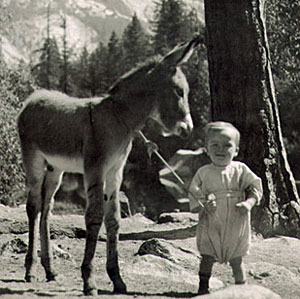
Robert Duncan, Yosemite Park, 1922

23 July 2011

Elena Milán

[from Elena Milán @ Mouth to Mouth: Poems by Twelve Contemporary Mexican Women, ed. Forrest Gander, Milkweed, 1993]

Alucinación I

Supongamos que una zona del mundo se ha unido
del Atlántico al Pacifico,
de Portugal al Japón;
desde el Mediterráneo y Mar del Norte,
al Artico hacia el este.
Supongamos que soplan mitos extraños
desde las viejas cavernas de Altamira
y las ruinas del Turkistán,
algo así como naves vikingas
y nuevas leyendas de tártaros y samurais.
Supongamos que el gobierno yanki no les gusta
y deciden desestabilizarlo.


Hallucination I

Let's supose a zone of the world falls together
from Atlantic to Pacific,
from Portugal to Japan;
from the Mediterranean to the North Sea
to the eastern Arctic.
Let's suppose strange myths lift
from the ancient caves of Altamira
and the ruins of Turkistan,
something like Viking ships
and fresh legends of Tartars and samurai.
Let's suppose the Yankee government doesn't please them
and they decide to destabilize it.

tr. Forrest Gander

17 July 2011

Denise Levertov

[from Denise Levertov's Collected Earlier Poems, 1940-1960, New Directions. 1979]

Sarnen

Under the harvest sun the heart
ripens on its wall,
under the heat of noon the mind
like a leaf is cool.
The angelus and the goatbell
sway across the grass;
butterflies in blue mid-air
touch and spin apart.
Any attempted dream must fall
to ruin in this light, must pass
before the mocking glance
of idle animals.
There is no need to escape
from the motionless mountain
there is no need to escape
when here the indifferent lake
accepts a nervous image,
demands no affirmation
of innocence or faith.

Switzerland, 1946


A Dream of Cornwall

Footprint of fury quiet, now, on the salt sand
hills couched like hares in the blue grass of the air
water lifting its glass . . .

1946


Kresch's Studio

Easels: a high & bare room:
some with charcoal, one with a brush,
some with loud pens in the silence,
at work. The woman
in taut repose, intent:

under violent light that pulls
the weight of the breasts to answer the long
shadow of thighs,
confronts angles with receding
planes, makes play with elements.

That they work, that she will not move too soon,
opposes (as Bartok's plucked strings oppose)
the grinding, grinding, grinding of lives,
pounding constant traffic.

On paper, on canvas, stroke, stroke: a counterpoint:
an energy opposing
the squandered energy.

New York, early '50's


Tomatlan (Variations)

. . .

iii

The green palmettos of the
blue jungle
shake their
green breasts, their stiff
green hair –
the wind, the sea wind is come
and touches them
lightly, and strokes them, and
screws them, until they
are blue flames,
green smoke, and
screws them again.

iv

At the touch
of the sea wind
              the palms
shake their green breasts, their

              rustling fingers –
flames of desire and pleasure. . . .

Denise Levertov